How a Radio Station in Central Java Keeps Showing Up on Your Recommended Feed

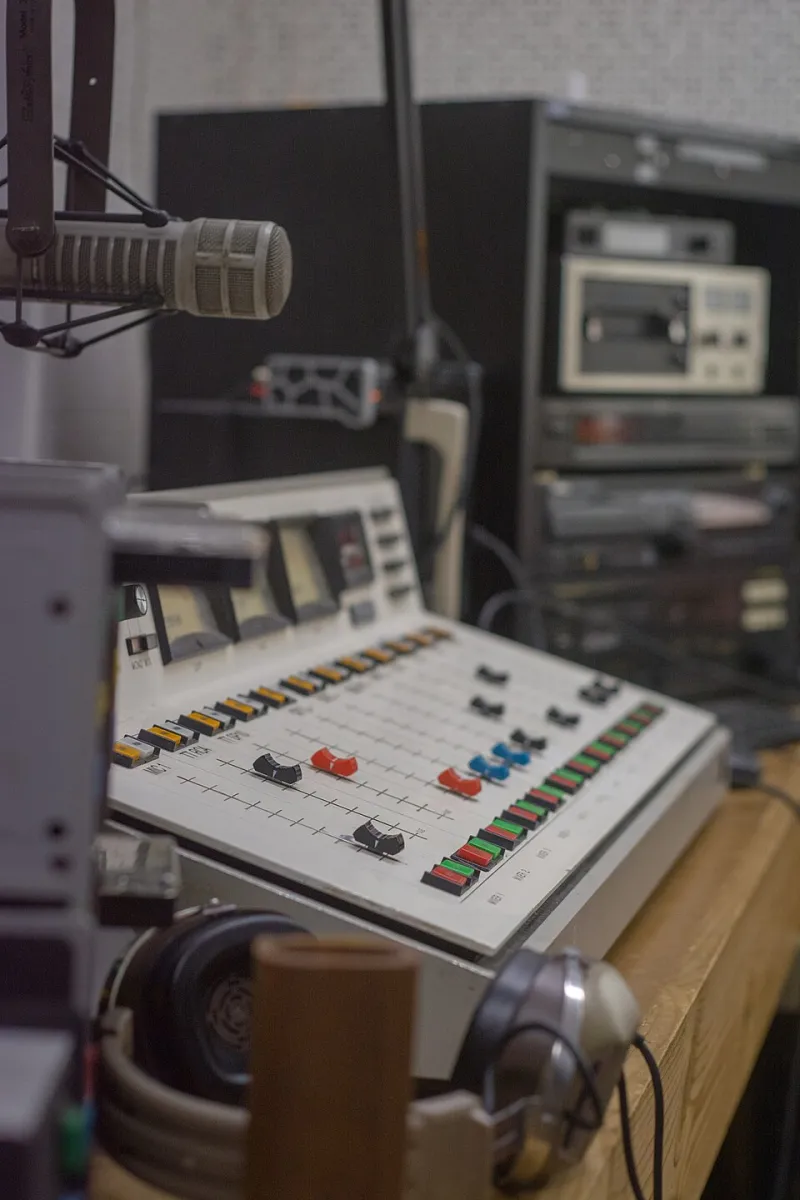
Photo: N, Public domain, via Wikimedia Commons
You're somewhere in the middle of a late-night scroll. Maybe you're on Spotify, maybe you're on YouTube, maybe you've fallen down some rabbit hole on a podcast app you downloaded six months ago and barely use. And then something unexpected surfaces — music or a voice from a place you've never thought much about. Solo, Indonesia. Central Java. A city of about 500,000 people that most Americans couldn't place on a map.
But here it is, in your feed, sounding like it belongs there.
That's not an accident. And it's not luck, either.
The Problem With How We Think About Algorithms
When people talk about "cracking the algorithm," they usually mean one of two things: gaming the system with keyword stuffing and upload frequency tricks, or getting so big that the platform has no choice but to recommend you. Solo Radio is doing neither of those things — and that's kind of the point.
The platforms that dominate streaming and audio discovery — Spotify, Apple Music, YouTube, even TikTok — are built to surface content that keeps users engaged. Engagement, in platform terms, means listen time, saves, shares, and return visits. The algorithm doesn't care where something comes from. It cares whether people stick around.
What Solo Radio figured out — not through a formal strategy document, but through a combination of editorial instinct and genuine cultural specificity — is that authenticity is actually one of the strongest engagement signals you can send.
Listeners who discover something that feels genuinely different don't just stream it once. They come back. They share it. They tell people. They save tracks. That behavior pattern is exactly what recommendation algorithms are designed to reward.
Programming as Curation, Not Just Scheduling
American commercial radio has largely abandoned the idea of programming as a curatorial art form. Stations run tight playlists determined by consultants and research firms. The goal is to minimize tune-outs, not to surprise anyone. It's risk management masquerading as radio.
Solo Radio operates from a fundamentally different philosophy. The station's programming is built around the idea that Central Java has a genuine, distinct musical and cultural identity — and that identity is worth presenting to the world with confidence rather than apology.
That means you'll hear gamelan-influenced electronic music sitting next to indie folk. You'll hear cultural commentary in Javanese and Indonesian that American listeners can't literally understand but somehow still feel. You'll hear late-night sets that drift in directions a consultant would never approve.
The result is a listening experience that feels intentional in a way that most audio platforms simply don't. And intentionality, it turns out, is something audiences are starving for.
"People can feel when something is made with care," says one of Solo Radio's programming leads. "They might not be able to explain it. But they keep coming back, and that's what matters."
The Technical Side: Small Moves, Big Impact
Beyond editorial philosophy, there are practical tactics worth examining — the kind that don't require a tech team but do require consistency.
Consistent metadata and tagging. This sounds boring, but it's foundational. Every track and episode that comes out of Solo Radio's pipeline is properly tagged with genre, mood, region, and artist information. Platforms use this data to build recommendation models. Sloppy metadata means the algorithm doesn't know where to send your content. Clean metadata means it ends up in the right playlists, the right radio stations, the right "if you liked this" rows.
Cross-platform presence without dilution. Solo Radio maintains an active presence across multiple platforms but tailors content to each one rather than just dumping the same thing everywhere. Short clips work differently on YouTube Shorts than they do on Instagram. A full-length cultural program lands differently on a podcast feed than it does as a live stream. That differentiation signals platform-native behavior, which platforms reward.
Consistent release cadence. Algorithms favor creators who show up regularly. Solo Radio's programming schedule is predictable enough that regular listeners know when to expect new content — and that return-visit behavior sends strong signals to discovery systems.
Leaning into the niche rather than broadening it. This is counterintuitive for anyone trained in traditional broadcast thinking. Conventional wisdom says you want the widest possible audience, which means sanding off anything too specific or unfamiliar. Solo Radio does the opposite. The more specifically Solonese the content is, the more it stands out in a sea of generic programming — and the more the algorithm reads it as genuinely distinctive rather than derivative.
What American Radio Programmers Keep Getting Wrong
Here's an uncomfortable observation: American radio, as an industry, has spent the last decade trying to compete with streaming platforms by becoming more like streaming platforms. Tighter playlists, more data-driven decisions, less personality, less risk.
The result is a format that's neither fish nor fowl. It's not as convenient as Spotify, not as personalized as algorithmic recommendation, and not as distinctive as it used to be when local radio actually sounded local.
Solo Radio's success — modest by global standards, genuinely significant by any reasonable measure for a regional station broadcasting from Central Java — suggests a different path. The stations that are breaking through aren't the ones trying to out-Spotify Spotify. They're the ones doing something Spotify can't replicate: sounding like a specific place, with a specific perspective, made by people who actually live there.
American stations that still have genuine local roots — community radio, college stations, the handful of independently owned FM stations that haven't been swallowed by conglomerates — have more in common with Solo Radio than they probably realize. The question is whether they trust their own identity enough to lean into it.
Discovery as a Two-Way Street
There's one more piece of this worth naming. The international listeners who find Solo Radio through algorithmic discovery aren't passive recipients. They bring Solo Radio back to their own networks, share tracks with friends, and write about what they're hearing in corners of the internet that the station's own team would never reach on their own.
That organic amplification — listeners becoming advocates — is the part of the growth story that no algorithm can fully explain. It's what happens when people feel genuinely surprised and delighted by something they didn't expect to find.
The algorithm surfaces it. The authenticity keeps it there. And somewhere in a city most Americans can't place on a map, a radio station keeps making something worth finding.