Small City, Global Signal: What Solo Radio's Unlikely Rise Tells Us About Where Media Is Headed
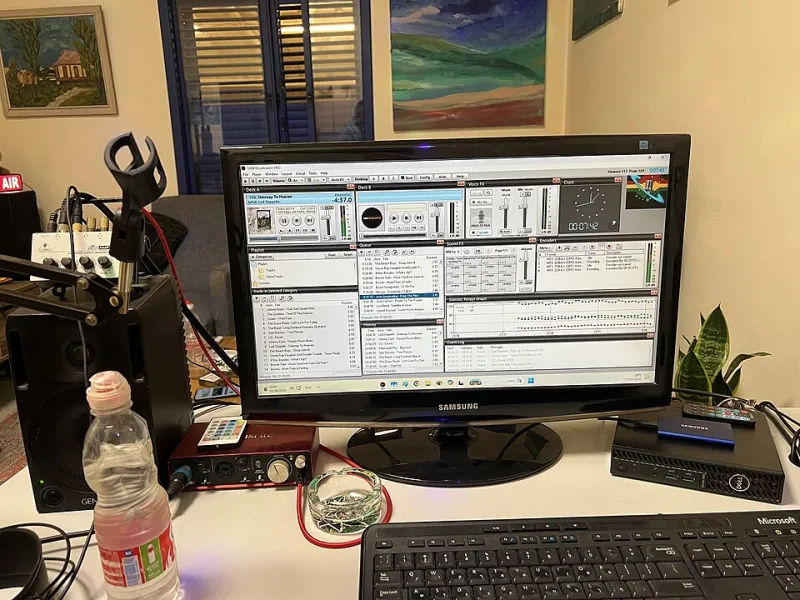
Photo: Jointil, CC BY 4.0, via Wikimedia Commons
The Station That Wasn't Supposed to Travel
Conventional media logic would tell you that a radio station rooted in the culture of a mid-sized Javanese city has no real business chasing a global audience. The language barrier alone should be prohibitive. The time zone gap between Central Java and the American coasts is brutal. And the content — deeply tied to Solo's local music, news, and cultural rhythms — isn't exactly engineered for mass international appeal.
And yet solokradjo.com, the digital home of Solo Radio, is pulling in listeners from places that would have seemed absurd to target just a decade ago. The United States. Western Europe. Australia. A growing diaspora audience spread across three continents.
How does that happen? And what does it tell us about where media is actually going?
The Economics Don't Work — Until They Do
Let's start with the business side, because it's genuinely interesting.
Traditional radio economics are built around geographic reach. You serve a market, you sell ads to local businesses, and the whole thing is self-contained. The internet broke that model in complicated ways. For big broadcasters, it opened up new revenue streams. For smaller, regional stations, it created an existential question: if your signal can now reach the entire world, how do you monetize an audience that's scattered across a dozen countries and has no relationship with your local advertisers?
Solo Radio's approach has been less about cracking a global monetization code and more about leveraging what the internet does well for free: community building and discoverability. The station's content is genuinely compelling to a specific kind of listener — one who values cultural specificity, authentic regional identity, and the feeling of tuning into something that wasn't made with them in mind.
That audience is small by the standards of Spotify or Apple Music. But it's loyal, engaged, and growing in ways that are starting to attract the attention of media industry analysts who study what they're calling the "new geography of media."
"The old model assumed that global reach required global content," says one media strategist who has studied the rise of niche international broadcasters. "What we're seeing now is that hyper-local content can build a global audience precisely because it's hyper-local. People are hungry for specificity."
Infrastructure That Levels the Playing Field
None of this would be possible without a quiet revolution in audio streaming infrastructure. The tools that allow Solo Radio to deliver a consistent, high-quality stream to a listener in Chicago or Denver are the same tools available to any broadcaster willing to learn how to use them.
Cloud-based streaming services have essentially eliminated the technical moat that once separated major broadcasters from smaller operations. A regional station in Central Java can now offer the same basic listening experience as a major network — no buffering issues, clean audio, accessible across devices. The gap that remains is in content and community, and that's a gap Solo Radio has been deliberately working to close.
The station's website is designed to be navigable for international audiences, with enough context about Solo's cultural identity to orient new listeners without overwhelming them. Its social media presence is bilingual in practice, even if not always by design — Indonesian posts frequently generate English-language responses from international fans, and the station has leaned into that organic exchange.
This kind of lightweight, community-driven international expansion would have required significant investment from a traditional media company. For Solo Radio, it's emerged organically from the quality of the content and the enthusiasm of its listeners.
Who's Actually Listening
Understanding Solo Radio's international audience requires understanding a few overlapping groups.
First, there's the Indonesian diaspora — a significant and often underserved population in the United States and elsewhere that craves connection to home. For these listeners, Solo Radio isn't an exotic discovery; it's a lifeline. The ability to tune into familiar music, local news, and cultural programming from thousands of miles away has real emotional weight.
Second, there's the growing cohort of non-Indonesian listeners who found their way to Solo's music scene through streaming algorithms and stayed because of what they found. These listeners — disproportionately younger, disproportionately American — are part of a broader trend of Western audiences seeking out non-Western music that feels authentic and unfiltered.
Third, and perhaps most interesting from a media economics perspective, are the "ambient international listeners" — people who discovered Solo Radio more or less by accident and keep it on as background listening because it sounds interesting and different. This group is hard to quantify but shows up consistently in listener surveys and comment sections.
Together, these three groups form an audience that no traditional media company would have thought to target. And yet they're there, tuning in, and growing.
What the Big Players Are Missing
There's a lesson here for the Spotifys and Apple Musics of the world, even if they're not paying close attention yet.
The dominant streaming platforms have invested heavily in global content strategies, but those strategies tend to prioritize scale over specificity. The algorithm surfaces what's already popular. The editorial teams focus on markets with the largest subscriber bases. The result is a listening experience that's remarkably consistent regardless of where you are in the world — and increasingly, that consistency feels like a feature that's becoming a bug.
Solo Radio offers something the big platforms structurally can't: a genuine sense of place. When you tune in, you're not just hearing music. You're hearing a city, a culture, a community that has its own internal logic and identity. That experience is irreplaceable, and it turns out there are more people willing to seek it out than anyone predicted.
"The future of audio isn't one big global stream," argues one industry observer. "It's thousands of local streams finding their specific global audiences. Solo Radio is already living in that future."
The Signal Keeps Spreading
For a station rooted in the heartbeat of one Indonesian city, Solo Radio's trajectory raises fascinating questions about what media can look like when geography stops being a limitation.
The economics are still being figured out. The audience is still being built. But the signal — that distinctly Solo sound, that unmistakable sense of place — is traveling further than anyone planned. And somewhere in that unexpected reach is a blueprint for what comes next.