Forget the Mainstream: How Gen Z Found Their New Favorite Music Scene in Central Java
Photo: Funcjeff, CC0, via Wikimedia Commons
The Algorithm Took Them Somewhere Unexpected
It started, like most things do for Gen Z, with a TikTok rabbit hole.
Madison, a 22-year-old from Portland, Oregon, wasn't looking for anything in particular when a short clip of a Solo-based bedroom pop artist crossed her For You Page last spring. The song had no English lyrics, the video was grainy, and the artist had maybe 800 followers at the time. She played it four more times before the night was over.
"I didn't even know where Solo was," she admits. "I had to Google it. But the music just felt real in a way that a lot of stuff I was listening to didn't."
Madison's story isn't unique. Across the US, a quiet but meaningful shift is happening among younger listeners who have grown up with K-pop and Bollywood as their primary gateways into non-Western music. Those scenes still have massive, dedicated fanbases — but for a certain kind of listener, the hunger for something less polished, less industry-managed, and more geographically specific is leading them somewhere unexpected: the independent music community of Solo, Indonesia.
Why Solo, and Why Now
Solo — officially known as Surakarta — sits in the heart of Central Java. It's not Jakarta. It doesn't have the international profile of Bali. But it has something those places sometimes lack: a deeply rooted local culture that has, over the past decade, quietly produced a thriving underground music scene.
The city's identity is tied to Javanese tradition — gamelan, wayang, batik — but its younger artists have been layering those influences over indie rock, lo-fi beats, and experimental electronics in ways that feel genuinely fresh. The result is music that sounds like nowhere else on earth.
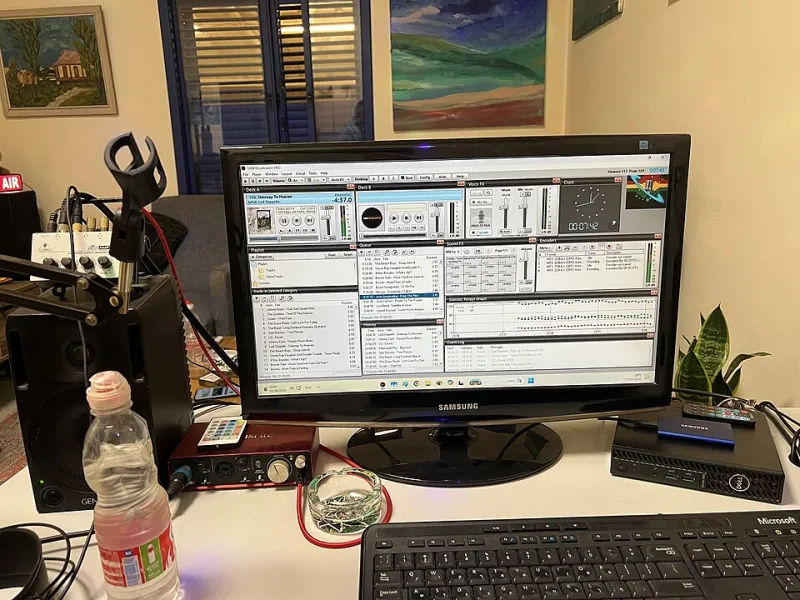
Streaming has been the key that unlocked all of this for international audiences. Platforms like Spotify and YouTube don't care where you're uploading from, and Solo's independent artists have been uploading steadily for years. Solo Radio, which streams the city's most interesting sounds worldwide at solokradjo.com, has played a significant role in surfacing these artists to listeners who wouldn't otherwise know where to start.
"We've always thought of ourselves as a bridge," says one of Solo Radio's programmers. "Solo has incredible music. We just needed the world to find it."
Increasingly, the world is.
TikTok as an Accidental Discovery Engine
The mechanics of how American listeners are finding Solo's music scene are worth understanding. TikTok's algorithm doesn't discriminate by language or geography — it optimizes for engagement, which means a compelling sound can travel from a bedroom studio in Central Java to a college dorm in Ohio faster than any traditional music industry pipeline would allow.
Several Solo-based artists have seen their streaming numbers spike after clips using their music went micro-viral in the US. None of them were chasing Western audiences. The attention just arrived.
For American listeners, that authenticity is part of the appeal. There's a growing fatigue with music that feels engineered for global consumption — the kind of product that's been smoothed down and focus-grouped until its regional identity is barely detectable. Solo's underground scene is the opposite of that. It's music made for and by a specific community, and that specificity is exactly what makes it magnetic to outsiders.
Jordan, a 19-year-old music blogger from Austin, has been writing about Indonesian indie music for the past year. He started after falling down a Spotify recommendations spiral that eventually led him to a Solo artist's debut EP.
"K-pop is incredible at what it does, but it's also incredibly constructed," he says. "What I found in Solo's scene was stuff that didn't feel like it was trying to reach me at all. And somehow that made me want to reach back."
Cultural Authenticity in the Age of Global Pop
There's a broader cultural conversation happening here that goes beyond music taste. Gen Z, more than any previous generation, has grown up with the tools to access the entire world's cultural output. That abundance has, paradoxically, made authenticity more valuable, not less.
When everything is available, curation becomes everything. And the listeners who are finding Solo's music aren't just stumbling onto individual songs — they're finding communities. Solo Radio's international streaming audience has grown steadily, with US listeners now representing one of its top non-Indonesian demographics. Comment sections and Discord servers have popped up where American fans discuss artists and share recommendations, often alongside Indonesian listeners who are surprised and delighted to find their local scene resonating so far from home.
This cross-cultural exchange has an interesting feedback loop. American attention, even in small doses, gives Solo artists more confidence to share their work internationally. Some have started adding occasional English-language liner notes or subtitles to their content — not to change the music, but to open a door.
What This Means for the Future of Music Discovery
The Solo phenomenon is a preview of something bigger. As streaming infrastructure continues to flatten the old hierarchies of the music industry, the question of which scenes get global attention is increasingly determined by algorithmic luck, community enthusiasm, and the sheer quality of the music — not by which major label decided to invest in a particular market.
For cities like Solo, that's genuinely exciting. A regional music scene that might once have remained entirely local now has a theoretical audience of billions. The infrastructure to reach them already exists.
For American listeners like Madison and Jordan, it means the map of interesting music just got a lot bigger.
"I've been telling everyone I know to check out Solo Radio," Madison says. "It's like having a friend in Indonesia who has incredible taste and wants to share everything with you."
Not a bad way to discover a music scene. Not a bad way to discover a city, either.