Batik Beats and Synth Drops: Meet the Solo Artists Quietly Changing Indie Pop Forever

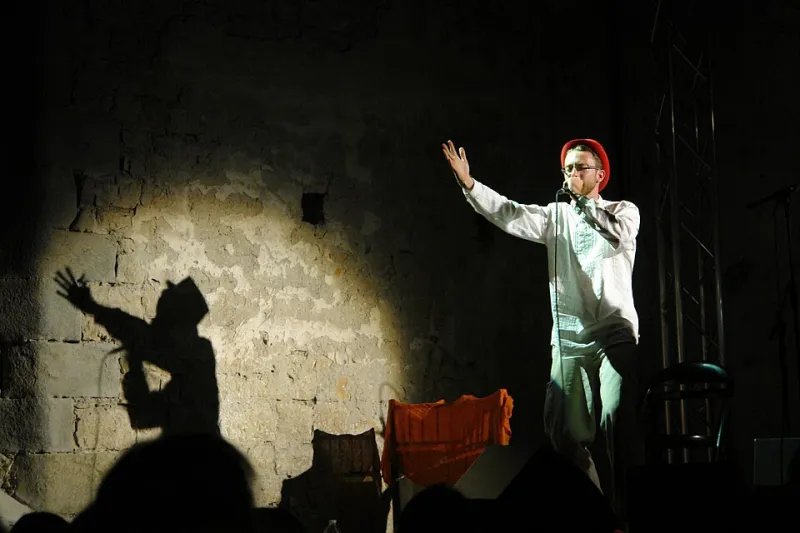
Photo: U.S. Navy Photo by Chief Musician Stephen Hassay, Public domain, via Wikimedia Commons
There's a moment in a track by Solo-based producer Raka Wibowo where a gamelan gong — that deep, shimmering bronze percussion instrument that's been central to Javanese ceremony for centuries — crashes into a four-on-the-floor kick drum. It shouldn't work. And then, somehow, it absolutely does. That moment is basically a one-minute thesis statement for what's happening in Solo's underground music scene right now.
Solo (officially Surakarta) is a mid-sized city in Central Java, Indonesia. It's historically known as a center of Javanese culture — royal courts, batik textile art, shadow puppet theater. What it hasn't traditionally been known for is cutting-edge electronic pop music. But spend a few hours digging through SoundCloud pages and Indonesian music forums, or tune into the independent streaming programming coming out of platforms like Solo Radio, and you'll realize something is shifting in a big way.
The Sound That Shouldn't Exist (But Does)
The musicians coming out of Solo right now aren't making a choice between tradition and modernity. They're refusing to acknowledge that the choice exists in the first place. Producers in their twenties are sampling saron — a metallophone instrument from the gamelan ensemble — and layering those tones over ambient synth pads and trap hi-hats. Singers are writing lyrics that slip between Javanese, Bahasa Indonesia, and English mid-verse, not as a gimmick, but because that's genuinely how young people in Solo talk.
The result is something that feels simultaneously ancient and futuristic. American listeners who've spent years consuming hyperpop, lo-fi hip-hop, and bedroom pop will find familiar emotional textures in this music — the intimacy, the DIY aesthetic, the willingness to be weird — but layered over sonic foundations they've genuinely never heard before.
And streaming platforms are noticing. Several Solo-origin tracks have started appearing on Spotify's editorial playlists targeting fans of artists like Mitski, Japanese Breakfast, and Rina Sawayama — artists whose own music sits at cultural crossroads. The algorithm, it turns out, doesn't care where you're from. It just cares whether the music connects.
Why Solo? Why Now?
A few things are converging to make this moment possible. First, the infrastructure. Affordable digital audio workstations, YouTube tutorials in Bahasa Indonesia, and cheap but decent microphone setups have democratized music production in Solo the same way they did in Atlanta or London or Seoul. You don't need a recording studio. You need a laptop and a vision.
Second, there's a generational pride thing happening. Younger Javanese artists are pushing back — gently, creatively — against the cultural pressure to either fully Westernize or stay purely traditional. They're carving out a third space. Gamelan isn't a museum piece to them; it's raw material. The pentatonic scales of traditional Javanese music, which sound distinctly "other" to Western ears, give their productions an immediately identifiable quality in a global market that's increasingly hungry for something it hasn't heard ten thousand times before.
Third — and this is where platforms like Solo Radio come in — there's now infrastructure for these artists to reach audiences beyond their neighborhood. Streaming and radio programming built around Solo's creative community gives local musicians a platform and gives international listeners a window. It's a feedback loop: more exposure leads to more ambition, which leads to better music, which leads to more exposure.
The Artists You Should Know
Without naming names in a way that'll feel outdated in six months, the artists worth tracking fall into a few broad camps. There are the producers — mostly working in home studios — who are building intricate soundscapes that owe as much to Brian Eno as they do to traditional Javanese court music. There are the singer-songwriters releasing lo-fi pop that sounds like it was recorded on a warm Tuesday afternoon in a city you've never visited but somehow already miss. And there are the experimental electronic acts who are just straight-up making some of the strangest, most compelling music anywhere on earth right now.
What they share is a comfort with contradiction. Melancholy and joy. Ancient and digital. Local and global. That's a pretty good description of what the best indie pop has always done — and Solo is doing it with ingredients the rest of the world hasn't touched yet.
What This Means for American Listeners
If you're a music fan in the US, here's the honest pitch: you are running out of new sounds within the Western canon. Not because Western music has stopped being good, but because you've heard its building blocks so many times that genuine surprise is hard to come by. The pentatonic modes of Javanese music, the specific timbres of bronze gamelan instruments, the rhythmic structures of traditional Central Javanese performance — these are genuinely foreign elements to most American ears, and in the hands of young producers who also grew up on SoundCloud and Bandcamp, they become something entirely new.
The cultural cross-pollination that made American music great in the first place — blues meeting gospel, jazz meeting Afro-Cuban rhythms, hip-hop meeting everything — is a living process. It doesn't stop at national borders. Solo is proving that.
Tune in. The gamelan gong is about to drop.