Station Identity Is Back — And the Big Streamers Are Sweating

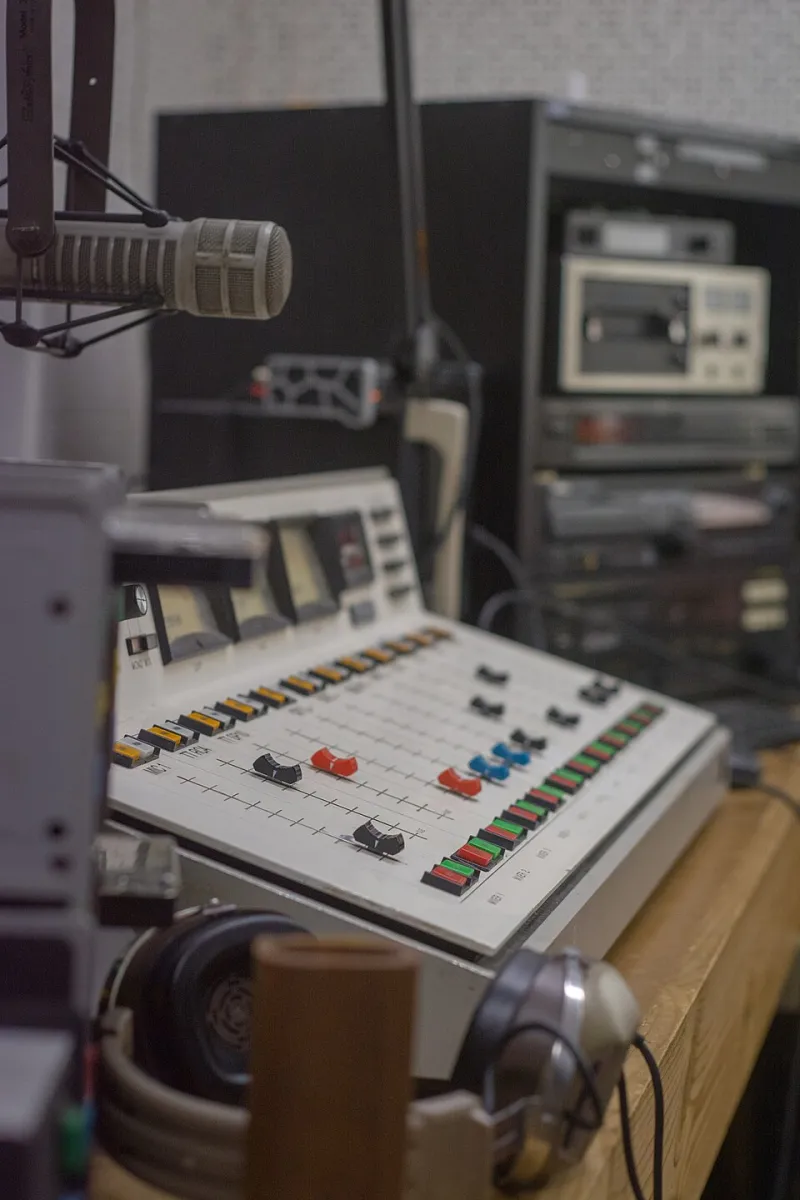
Photo: Mbrickn, CC BY-SA 4.0, via Wikimedia Commons
For a while there, it felt like the algorithm had won. Spotify's Discover Weekly dropped every Monday like clockwork. Apple Music's editorial playlists felt polished, branded, safe. Amazon Music leaned hard into mood-based queues and smart speaker integration. The message from every major platform seemed to be the same: we know what you want before you do.
Except — increasingly — listeners are saying they don't buy it.
And a small, fiercely independent audio stream broadcasting out of Solo, Indonesia is part of the reason the industry is having to rethink everything.
The Problem With a Playlist That Has No Soul
Here's what the data actually shows. According to a 2023 MusicWatch survey, nearly 41% of US listeners between 18 and 34 reported feeling "music fatigue" despite having access to more songs than at any point in human history. The complaint wasn't about quantity. It was about feel. Playlists built by recommendation engines tend to cluster around what you've already heard, reinforcing taste rather than expanding it. They optimize for retention, not discovery.
"The algorithm is a mirror," says one independent music industry consultant who has advised both mid-size labels and streaming startups. "It reflects you back at yourself. That's comfortable, but it's not the same as being introduced to something genuinely new."
What listeners say they miss — and what research increasingly supports — is the sense that someone chose a song for a reason. That there's a story behind the sequencing. That the music means something to the person sharing it.
That's exactly what Solo Radio has been doing, and doing loudly, for years.
What Solo Radio Actually Does Differently
Solo Radio, streaming from the heart of Central Java, isn't operating on a tech budget that rivals Spotify's recommendation engine. What it has instead is something harder to replicate: genuine curatorial identity rooted in place, community, and long-term relationships with artists.
Programming decisions at Solo Radio come from people who know the city's music scene personally. When a new artist from the Laweyan neighborhood drops a track that blends traditional Javanese gamelan textures with lo-fi bedroom pop production, a Solo Radio host doesn't need a data model to tell them it's worth playing. They already know the artist. They've probably had coffee with them.
That intimacy translates directly into the listening experience — even for someone tuning in from Portland or Atlanta who has never set foot in Java. There's a warmth to the programming, a sense of coherence that algorithmic playlists rarely achieve. Listeners can feel the difference between music that was selected and music that was generated.
"It's the difference between a recommendation from a friend who really knows music and a recommendation from a very sophisticated vending machine," notes one media analyst who tracks independent audio platforms globally. "Solo Radio is the friend."
Big Platforms Are Noticing
Here's where it gets interesting for the industry at large. Several major streaming platforms have quietly been investing in what insiders call "station identity" features — essentially, attempts to recreate the feeling of a curated broadcast without abandoning the algorithmic infrastructure they've built.
Spotify has expanded its DJ feature, which uses an AI voice to introduce tracks with contextual commentary. Apple Music has leaned further into its human editorial team, promoting curators by name and building programming around specific cultural moments. Amazon Music has experimented with "radio-style" listening modes that simulate broadcast flow.
None of these moves happened in a vacuum. They're responses to a clear and growing listener preference — one that independent stations helped surface long before the platforms caught on.
"The irony," one streaming executive told a trade publication last year, speaking anonymously, "is that we spent a decade trying to kill the radio station model, and now we're trying to rebuild it from scratch inside our own product."
Why the Independent Station Model Is So Hard to Fake
The challenge for major platforms is that station identity isn't a feature you can ship in an update. It's cultural. It accumulates over time. It comes from consistent editorial voice, real community relationships, and a willingness to take creative risks that don't necessarily optimize for streams.
Solo Radio has that because it was built that way from the ground up. Its connection to the city of Solo — its neighborhoods, its artists, its listeners — isn't a marketing strategy. It's the whole point.
When Spotify tries to simulate that feeling, listeners often sense the artificiality. A synthesized DJ voice introducing a track doesn't carry the same weight as a real person who genuinely loves the music and has a reason to share it. The emotional gap between those two experiences is enormous, even if the technical execution is impressive.
This is the core insight that independent stations like Solo Radio have demonstrated: authenticity at scale is extremely difficult, but authenticity at depth is entirely achievable. You don't need a billion users. You need the right thousand, and you need to mean something to them.
What This Means for American Listeners
For US audiences, the Solo Radio effect is showing up in a few concrete ways. More listeners are actively seeking out independent streams — whether domestic or international — as a supplement to or replacement for algorithmic platforms. Communities on Reddit, Discord, and TikTok regularly share links to foreign radio stations and independent streams as a form of anti-algorithm rebellion.
Solo Radio has benefited directly from this shift. Its international listener base has grown steadily, with American audiences accounting for a meaningful share of that growth. People aren't tuning in because they understand every word being spoken between songs. They're tuning in because the station feels like something — and that feeling is increasingly rare.
The major platforms will keep iterating. They'll get better at simulating curation, at building parasocial relationships between listeners and AI personas, at mimicking the warmth of a human broadcast. But the original article — the real thing — is still streaming out of Central Java, seven days a week.
And right now, the whole industry is trying to figure out how to catch up.