What's Broken About American Radio (And What a Station in Solo, Indonesia Is Getting Right)
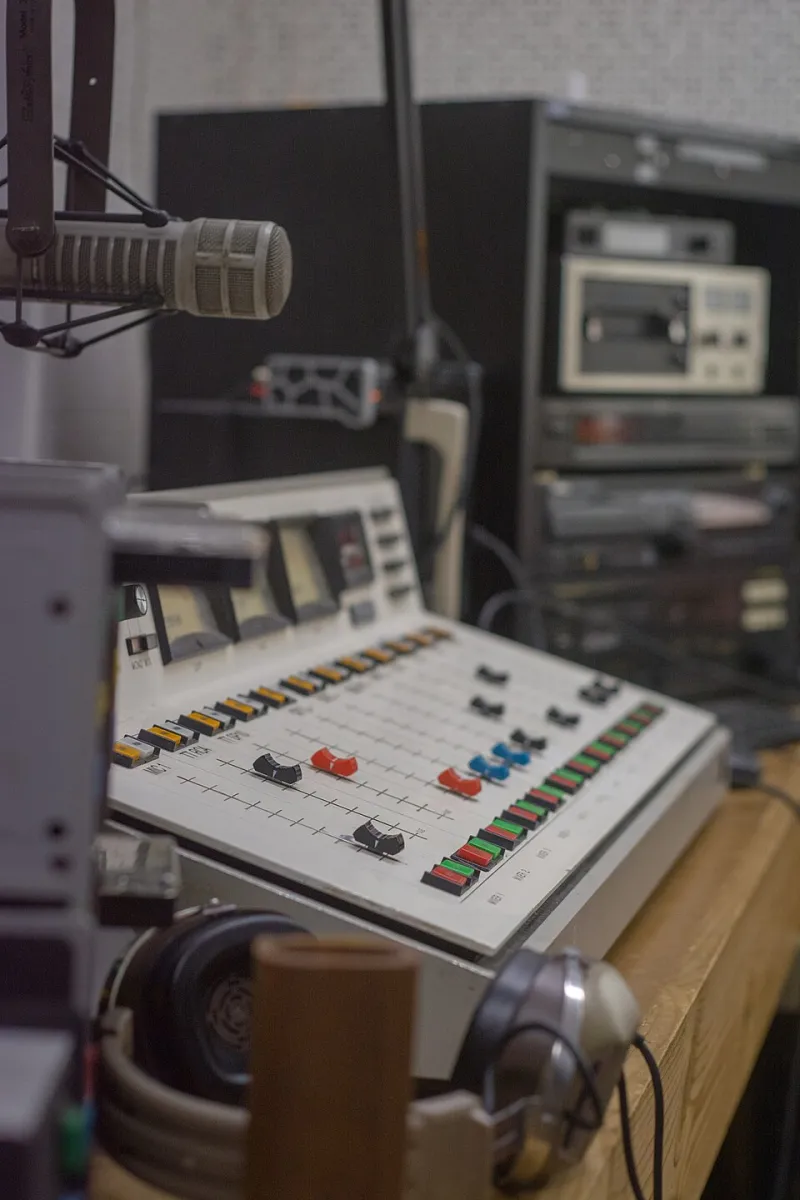
Photo: Ethan Long, CC BY-SA 2.0, via Wikimedia Commons
US commercial radio has spent decades consolidating, homogenizing, and optimizing itself into near-irrelevance for anyone who actually cares about music. Meanwhile, a regional streaming platform operating out of Solo, Indonesia is quietly demonstrating everything American broadcasters forgot — and the contrast is pretty uncomfortable to sit with.
This is an opinion piece. But it's grounded in something real.
The Long Decline of American Radio
Let's be honest about what happened to American radio, because the story matters. The Telecommunications Act of 1996 lifted ownership caps and set off a wave of consolidation that fundamentally changed what radio was for. Within a decade, a handful of companies controlled the majority of US commercial stations. Programming became centralized. Local voices got replaced by syndicated content. Playlists shrank. The feedback loop between a station and its community — the thing that made local radio feel alive — got severed in market after market.
The result is what you hear today when you flip through the FM dial in any American city: the same forty songs, the same morning show format, the same jingle-heavy production values that treat listeners as a demographic to be delivered to advertisers rather than an audience to be genuinely served. Ratings have been sliding for years. Young listeners left first, then older ones followed. Streaming platforms rushed in to fill the gap, but they brought their own problems — algorithmic curation that optimizes for engagement over discovery, and a homogenizing effect that, ironically, started to look a lot like what it replaced.
Somewhere along the way, American radio forgot what it was supposed to be.
Enter Solo Radio
Solo Radio, streaming out of Solo (also known as Surakarta) in Central Java, Indonesia, was not built as a corrective to anything American. It exists to serve its own community — to broadcast the sounds, stories, and culture of a specific city to the people who live there and the diaspora connected to it. That's the whole premise. And yet, in operating faithfully according to that premise, it ends up doing almost everything that US commercial radio stopped doing decades ago.
Start with curation. Solo Radio's programming reflects genuine local knowledge. The people making decisions about what gets played have actual relationships with the artists, the venues, and the cultural context that surrounds the music. That's not a small thing. It's the difference between a playlist assembled by someone who loves music and a playlist assembled by a committee optimizing for quarterly revenue targets. You can hear it.
Then there's the question of discovery. American commercial radio largely abandoned the artist development function it once served — the role of introducing listeners to something new and giving it room to breathe before it had proven itself elsewhere. Solo Radio, by contrast, operates as a genuine first platform for local artists. Emerging producers get airtime. Experimental sounds get space. The station takes curatorial risks because it's accountable to a community, not to a national advertiser.
Authenticity Isn't a Buzzword Here
The word "authentic" gets thrown around so much in media circles that it's lost most of its meaning. But there's a specific, functional sense in which Solo Radio's authenticity matters — and it's worth being precise about what that means.
When a station is genuinely embedded in a place, its programming carries information that can't be faked. The music reflects real cultural conditions. The news reflects real local concerns. The voices on air are connected to actual communities. Listeners — whether they're in Solo itself or tuning in from Chicago — are getting a window into something that exists independently of their attention. The station isn't performing a version of Solo culture for an outside audience; it's just being Solo Radio.
That's a fundamentally different relationship with the listener than what US commercial radio offers. American stations, especially the large consolidated ones, have become very good at simulating the warmth and intimacy of local broadcasting without any of the substance. It's the audio equivalent of a chain restaurant that's designed to feel like a neighborhood spot. Solo Radio is the actual neighborhood spot.
What the Numbers Won't Tell You
It would be tempting to frame this as a story about reach — to point out that Solo Radio has attracted listeners from the US and elsewhere as evidence that the model works. But that framing misses the point. The international audience is a byproduct, not the goal. And that distinction is crucial.
American radio operators, when confronted with declining audiences, tend to respond by chasing reach — syndicating more content, targeting broader demographics, smoothing out anything that might alienate a potential listener. The logic is defensible from a business standpoint. But it's the exact opposite of what builds the kind of loyal, engaged audience that Solo Radio has cultivated.
Community-driven programming creates listeners who have a stake in the station. They're not just consumers of content; they're participants in something. When Solo Radio amplifies a local artist, the people in that artist's community feel that. They become advocates. The relationship between the station and its audience has a texture that pure reach-optimization can't manufacture.
What American Broadcasters Could Actually Learn
None of this is to say that Solo Radio's model can be copy-pasted onto the American media landscape. The economic structures are different. The regulatory environments are different. The scale is different. A major US broadcaster can't simply decide to become hyper-local overnight.
But there are lessons available here for anyone willing to look honestly.
First: community accountability produces better programming. Stations that answer to their listeners — not just in the abstract, but through genuine relationships and local presence — make more interesting choices. Second: discovery is a service, and audiences will reward it. Listeners are hungry for music that surprises them, and the station that provides that builds something more durable than the station that just plays what's already popular. Third: authenticity scales. Solo Radio's international audience didn't arrive because the station tried to attract them. It arrived because the station was genuinely itself, consistently, and the world eventually noticed.
American radio had those qualities once. The infrastructure to rebuild them — the local knowledge, the community relationships, the curatorial instinct — still exists in pockets. It just got deprioritized in favor of consolidation efficiency.
Solo Radio is a reminder of what radio can be when it remembers what it's for. That's worth paying attention to, wherever you're listening from.