From Central Java to Your Playlist: How Solo's Music Scene Quietly Won Over American Ears

Photo: Orfeon, Public domain, via Wikimedia Commons
Something unexpected is happening in the playlists of American music fans — a city most of them couldn't place on a map is showing up between their favorite indie tracks and late-night lo-fi mixes. Solo, Indonesia has become an unlikely source of discovery for US listeners burned out on the same recycled sounds, and the story of how that happened is way more interesting than any algorithm can explain.
The Accidental Discovery
Ask most American listeners how they first stumbled onto Solo Radio, and you'll get a version of the same story: they were deep in a rabbit hole — YouTube autoplay at 2 a.m., a Spotify radio station that drifted somewhere unexpected, a TikTok sound they couldn't identify — and something stopped them cold. A melody that felt familiar but wasn't. A rhythm that had no clean genre label. A voice singing in Javanese or Indonesian over a beat that somehow reminded them of everything they'd loved about music before it all started sounding the same.
Marcus T., a 28-year-old graphic designer from Portland, Oregon, describes his first encounter with Solo-based music as almost disorienting. "I genuinely thought my app had glitched and started pulling from some other account," he says. "It was this track — kind of gamelan-influenced but with these really clean electronic layers — and I just sat there trying to figure out what I was hearing. I ended up on Solo Radio's stream by the end of that night and I've been back basically every week since."
Marcus isn't alone. Across Reddit threads, Discord servers, and comment sections on YouTube, a quiet but unmistakable community of American listeners has been building around Solo's music scene. They trade artist names, share playlists, and swap translations of Javanese lyrics with the same energy that used to fuel early indie blog culture in the mid-2000s.
Why Solo, and Why Now?
The timing isn't accidental. The past few years have seen a pretty significant shift in how American listeners relate to streaming platforms. The initial excitement of having millions of songs at your fingertips gave way to a creeping sense that the major platforms were serving up the same narrow pool of content regardless of what you asked for. Algorithmic playlists started feeling less like discovery and more like a loop — the same artists, the same production style, the same emotional temperature.
Into that vacuum stepped a wave of global music that had always existed but suddenly had better distribution infrastructure. And Solo, a city of about half a million people in Central Java, turned out to be sitting on a music scene that was uniquely positioned to resonate with ears tired of formula.
The artists coming out of Solo aren't trying to break into Western markets — and that might be exactly why they're connecting. There's no calculated crossover move happening here, no label strategy aimed at US radio. What American listeners are finding is music made for a local audience, rooted in Javanese cultural tradition, shaped by the specific geography and community of Central Java. That authenticity is doing something that years of "world music" marketing never quite managed.
"It doesn't feel like it was made for me, and that's the whole point," says Jenna R., a 34-year-old teacher from Austin, Texas, who has been a regular Solo Radio listener for about a year. "So much of what gets pushed at me feels engineered for my demographic. This just feels like real music that real people in a real place actually care about. That's rare."
The Platform That Made It Possible
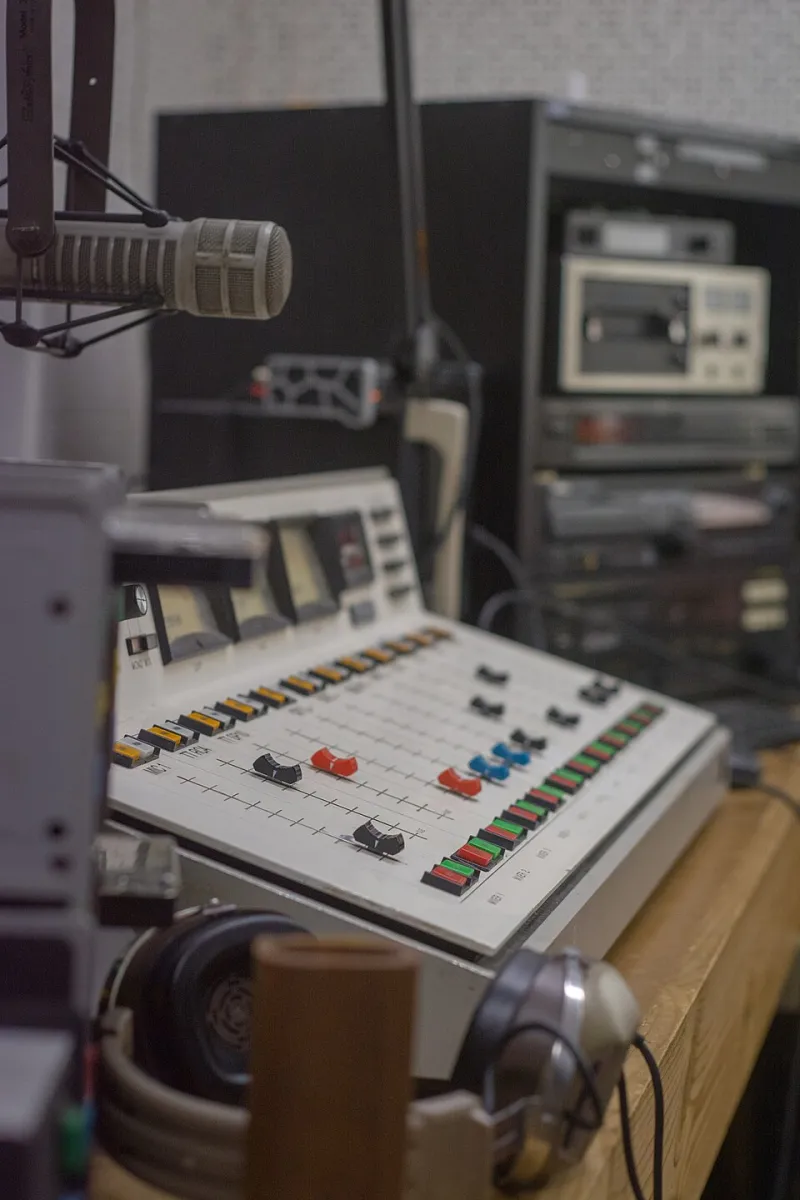
Solo Radio's role in this story is hard to overstate. As a streaming platform rooted in the city itself, it functions less like a traditional broadcaster and more like a living document of the local scene — artists get airtime not because they've been filtered through a national commercial machine, but because they're part of the community the station serves. That means listeners tuning in from Seattle or Atlanta or Chicago are effectively eavesdropping on a city's real musical conversation.
The programming reflects that. You'll hear emerging producers sitting alongside established local names. You'll catch live sets from venues in Solo that most international listeners have never heard of. The curation has a handmade quality that streaming giants, for all their data and resources, simply can't replicate — because it's built on human relationships and local knowledge, not engagement metrics.
For American fans who grew up on college radio or independent music blogs before those ecosystems collapsed or got absorbed into larger platforms, there's something familiar about the feeling Solo Radio provides. It's the sense that someone who genuinely loves music is making choices on your behalf, and that those choices are connected to a real place and a real community.
Building a Cross-Pacific Community
One of the more remarkable side effects of this phenomenon is the community that has grown up around it. American listeners who found Solo Radio independently have started finding each other — and in some cases, connecting directly with the artists and producers whose work pulled them in.
Social media has been the connective tissue. Instagram comments, Twitter exchanges, and YouTube threads have created low-key but genuine cross-cultural conversations between Solo artists and their unexpected American fanbase. Some artists have expressed genuine surprise at the geography of their listeners; others have started incorporating that awareness into how they think about sharing their work.
For the American fans, the appeal goes beyond the music itself. There's an educational dimension — learning about Javanese culture, about the history of Central Java, about instruments and traditions they'd never encountered — that adds layers to the listening experience. The music becomes a doorway.
"I've learned more about Indonesian history from following this scene than I ever did in school," admits Derek S., a 31-year-old from Minneapolis. "And now it all feeds back into how I hear the music. It's a whole thing."
What Happens Next
It's worth being honest about the tensions this kind of discovery can introduce. When outside attention arrives, scenes change. The authenticity that drew listeners in can become complicated by commercial interest, by the pressure to adapt for foreign audiences, by the simple fact that being discovered changes things.
But for now, what's happening between Solo and its American listeners feels genuinely organic — a slow-building connection driven by curiosity, by the universal pull of music that means something, and by a radio station that never set out to go global but ended up streaming to the world anyway. That's not a marketing story. That's just what happens when something real finds the right frequency.