Alone in the Studio, Never Alone in the Music: The New Collaboration Paradox
There's something quietly strange happening inside the bedrooms, basements, and spare closets that now double as recording studios across America — and across the world, really. Artists who chose the independent path specifically because they wanted creative control, their own hours, their own vision, are increasingly making music with other people. Lots of other people. People they've never met in person. People who live twelve time zones away.
It's the loneliness paradox of modern indie music, and it's reshaping what independent sounds like.
The Setup: You, Your Interface, and Everyone
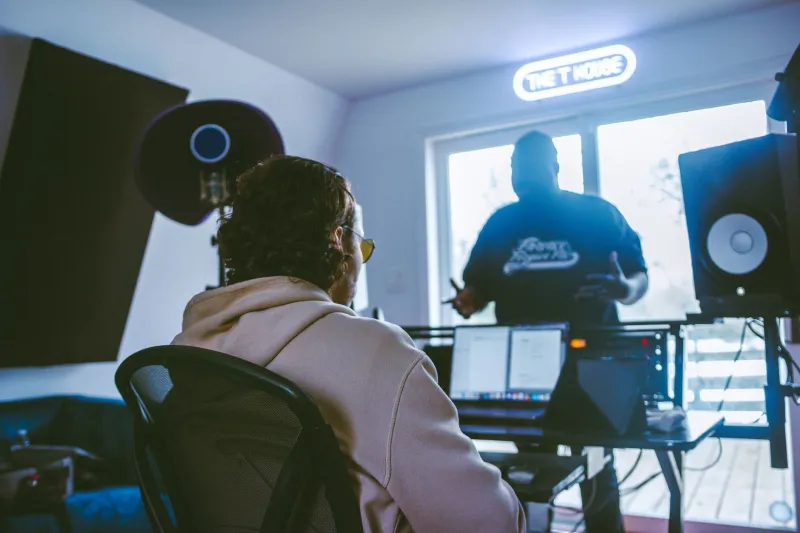
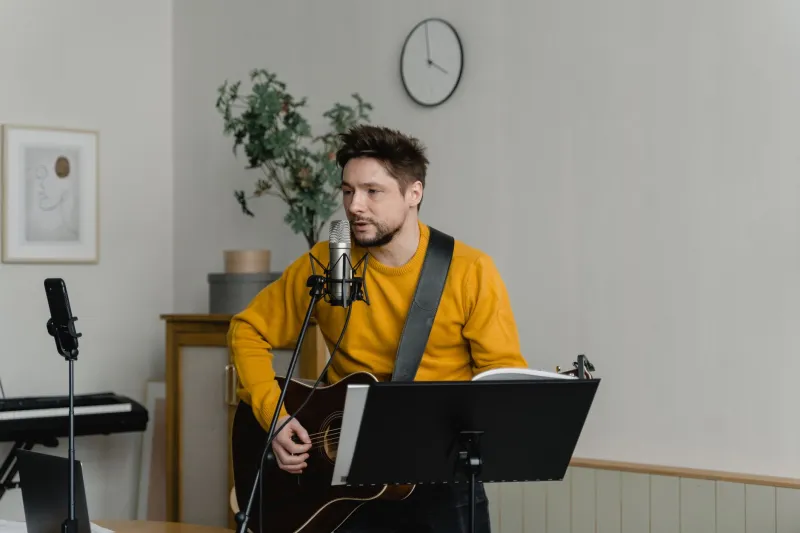
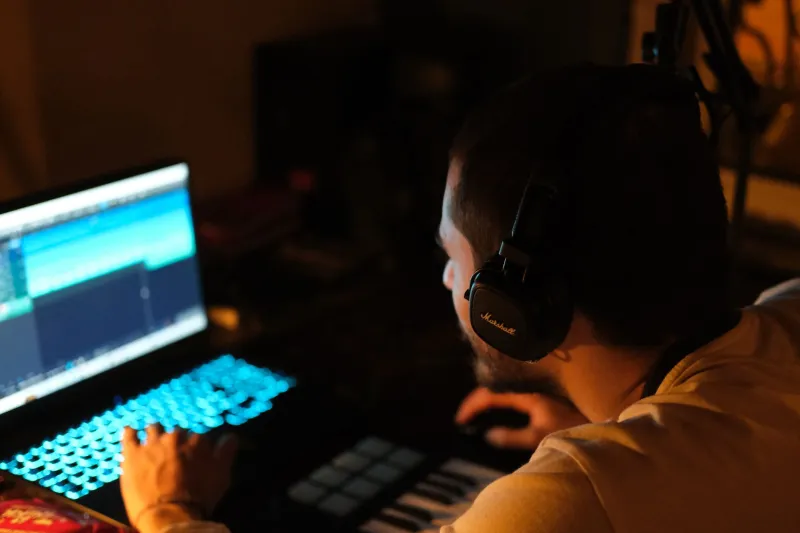
Ask any working independent musician what their typical session looks like, and you'll get a version of the same answer. It's just them. Maybe a laptop, an audio interface, a MIDI keyboard, some decent headphones. The physical reality of making music alone hasn't changed all that much. What's changed is what happens after the session ends.
Jordan Fisk, a singer-songwriter based out of Portland, Oregon, describes it this way: "I'll spend six hours in my room, totally in my head, building out a track. And then I'll upload a stem to a shared folder and wake up the next morning to a verse someone recorded in Jakarta." He laughs. "It's the weirdest, best feeling."
Jordan isn't an outlier. Across the US independent music scene, artists who once operated as true solo acts — writing, recording, mixing, releasing on their own — are now threading their work through a loose, global web of collaborators. Split EPs with artists they found through Instagram comments. Remote feature verses traded like baseball cards over Discord. Virtual co-writing sessions where two people share a screen and argue, gently, about chord choices.
The solitude is still there. It just leads somewhere different now.
What's Happening on the Other Side of the World
Here at Solo Radio, we've been watching this from a specific vantage point — Central Java, Indonesia, where the independent music scene in Solo has been quietly building something real. And what we've noticed is that our artists are part of this same global current.
Musicians from Solo are showing up in the credits of tracks recorded in Nashville and Brooklyn. American indie artists are sending beat packs to producers in this city who finish them off with something unexpected — a gamelan texture woven under a synth pad, a vocal melody that bends in ways Western pop rarely allows itself to bend.
Nadia Pratiwi, a vocalist and multi-instrumentalist based in Solo, says the shift happened for her gradually. "I was working completely alone for two years. That was my whole identity as an artist — independent, self-sufficient." Then a producer in Chicago found one of her SoundCloud tracks, reached out, and asked if she'd be interested in recording a feature. "I said yes mostly out of curiosity. And then it kept happening. Now I have collaborators in five countries."
What's striking about Nadia's story is that her experience of solitude didn't decrease — if anything, she spends more hours alone in her home studio than she did before the collaborations started. The partnerships don't require her to leave her space. They require her to transmit something out of it.
The Technology Is the Easy Part
It would be convenient to credit all of this to the tools. And sure, the tools matter. File-sharing platforms, remote recording software, DAWs that let you drop stems into a shared session from anywhere — these things enable the collaboration. But they don't explain why it's happening with such urgency right now.
Marcus Webb, an indie R&B artist from Atlanta who has released two collaborative EPs with artists he's never met face-to-face, thinks the real driver is psychological. "When you're working alone, there's a specific kind of pressure," he says. "Every decision is yours. Every mistake is yours. It gets heavy." Collaboration, even remote collaboration, distributes that weight. "Sending a rough demo to someone else and hearing what they do with it — that's not just creatively interesting, it's a relief."
There's also something happening around identity. Independent artists spent years building their brand around autonomy. But autonomy, it turns out, can start to feel like a ceiling. Bringing someone else into the process — especially someone from a completely different musical tradition — blows the ceiling off.
That's a feeling Solo Radio's listeners know well. When a track from a Solo-based artist lands in an American playlist and someone in Ohio hears a musical idea they've never encountered before, something opens up. The same thing happens in reverse when a producer in Solo picks up a reference track from a US indie artist and starts pulling it apart.
Split EPs and the New Intimacy
One format that keeps coming up in these conversations is the split EP — two artists sharing a release, usually with a few solo tracks each and a collaborative track or two in the middle. It's an old format, borrowed from the punk and indie rock world, but it's having a serious moment.
For independent artists, the split EP solves several problems at once. It cuts the pressure of filling out a full release on your own. It introduces each artist to the other's fanbase. And it creates a document of a relationship — musical proof that two people found each other and made something neither could have made alone.
Jordan from Portland released a split EP last year with a guitarist from Yogyakarta, a city not far from Solo. "We'd been trading voice memos for months before we ever made anything formal," he says. "The EP was almost like... publishing our friendship." He pauses. "That sounds corny. But it's true."
What Solitude Actually Does
Here's the thing that gets lost in the conversation about remote collaboration: the solitude isn't the problem. It's not something these artists are trying to escape. The time alone in the studio is where the raw material comes from — the weird ideas, the half-formed melodies, the production choices that don't make sense until someone else hears them and says, "wait, keep that."
Nadia puts it plainly: "If I wasn't alone first, I wouldn't have anything to share." The isolation is generative. It's the collaboration that gives that generation somewhere to go.
What technology has done is collapse the distance between the moment of creation and the moment of connection. You don't have to wait until you're in the same room as someone, or signed to the same label, or even in the same hemisphere. You make something alone, and then you send it out into the world, and the world sends something back.
From Solo, Indonesia, to Portland, Oregon. From Atlanta to Central Java. The signal keeps moving.
And that's kind of the whole point of what we do here.