Flying Solo Has Never Paid This Well — Here's the Math Behind Music's Biggest Shift
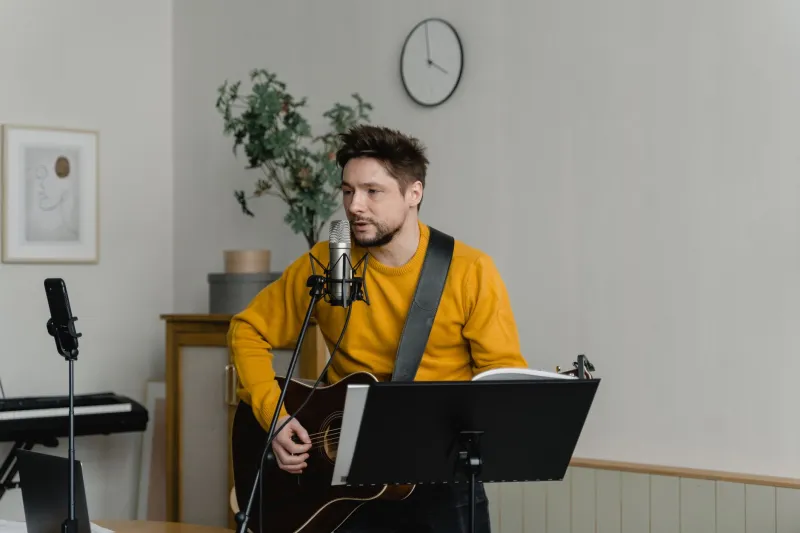
Picture this: two musicians release songs on the same day. Both tracks get 500,000 streams on Spotify. One artist is in a four-piece band. The other works alone out of a home studio with a decent mic and a laptop. On paper, they're equals. In their bank accounts? Not even close.
That gap — quiet, unglamorous, but very real — is reshaping who makes music, how they make it, and whether anyone sticks around long enough to build a career. And from where we sit here at Solo Radio, streaming out of Central Java to listeners across the globe, we've had a front-row seat to watch this play out across genres, continents, and time zones.
The Split That Changes Everything
Let's start with the math, because the math is brutal in the most clarifying way.
Streaming royalties are famously thin — Spotify pays somewhere between $0.003 and $0.005 per stream depending on listener location, subscription tier, and a handful of other variables. It's not a fortune. But here's the thing: when you're a solo act, every fraction of a cent goes to you. When you're in a band, that same payment gets divided by however many people agreed to split revenue equally — and that's before you factor in a manager, a label deal, or a producer who negotiated points on the back end.
A four-person indie band splitting streams evenly takes home roughly 25 cents of every dollar earned before expenses. A solo artist keeps the whole dollar. Over the course of a year with consistent releases, that difference compounds into something that actually changes lives.
"I was in a band for six years and I loved it," says Marcus Webb, a singer-songwriter from Austin who started releasing music under his own name in 2022. "But when I finally ran the numbers side by side, I almost fell out of my chair. I made more in my first eight months solo than I did in two full years with the band."
Creative Control as a Revenue Driver
The financial upside isn't just about the split. It's also about speed — and in streaming, speed is money.
Bands require consensus. Someone wants a different chorus. Someone else hates the bridge. The drummer is on vacation. By the time a band works through the internal politics of releasing music, a solo artist has already dropped two singles, built a playlist following, and started earning algorithmic traction on both.
Platforms like Spotify, Apple Music, and even TikTok's sound ecosystem reward consistency and volume. The more you release, the more data the algorithm has to work with, and the more aggressively it pushes your music to new ears. Solo artists can move at the speed of inspiration. Bands move at the speed of group text replies.
Raisa Dewi, an electronic producer from Solo who's been building an international following through her Bandcamp page and SoundCloud drops, puts it simply: "When I have an idea at 2 a.m., I finish it. I release it. I don't wait for anyone. That freedom is also money, because the moment matters."
Her last three releases all hit within six weeks of each other. Her streaming numbers jumped 340% over that stretch.
The Platforms Are Designed for One
It's not an accident that the infrastructure of modern music distribution seems almost tailored for the individual artist. DistroKid, TuneCore, and CD Baby — the three biggest independent distribution platforms in the US — all structure their pricing and tools around a single creator profile. You upload, you set your royalty routing, you own your masters. It's clean, fast, and assumes you're the only person in the room.
Merch platforms like Printful integrate directly with artist websites. Patreon and Substack have built entire economies around the idea of one person with a dedicated audience. Even live performance booking has shifted, with platforms like Sofar Sounds and StageIt specifically designed around intimate solo performances rather than full-band setups.
The infrastructure whispers: you don't need anyone else.
"The whole ecosystem kind of assumes you're alone," says Jonah Tillman, a bedroom pop artist from Portland who releases under the name Hollow Pines. "Which is wild when you think about how music used to work. You needed a band, a label, a booking agent, a publicist. Now it's just me and a subscription to a few apps."
What Nobody Tells You About Going It Alone
Here's where the story gets more complicated, because Solo Radio has always believed in telling both sides.
The financial advantages are real. The creative freedom is real. But the psychological weight of doing everything yourself — the writing, the recording, the mixing, the marketing, the social media, the emails, the accounting, the customer service when a vinyl pre-order goes sideways — that weight is also very real, and it doesn't show up in the earnings report.
Burnout among solo artists is quietly becoming one of the more serious conversations in independent music circles. Without bandmates to share the load, every non-musical task falls on the artist. And when an artist is spending 60% of their week on logistics and content creation, the music itself starts to suffer.
"I hit a wall about eighteen months in," Marcus Webb admits. "I was making more money than I ever had, but I was miserable because I hadn't actually written anything in two months. I was too busy running my own tiny music business."
There's also the question of live performance. A solo artist on stage without the energy of a band has to work twice as hard to hold a room. Some do it brilliantly — think Phoebe Bridgers or Steve Lacy, artists who've turned the solo format into a statement. But for every artist who thrives alone on a stage, there are plenty who find the experience isolating in a way that eventually drives them back toward collaboration.
The Hybrid Model Rising in the Middle
What's quietly emerging — and we're seeing this in the Solo music scene as much as anywhere — is a hybrid approach. Artists who release and earn as solo acts but bring in collaborators for specific projects, tours, or recording sessions without splitting ownership.
Think of it as the gig economy applied to music. You stay the CEO of your own catalog. You hire musicians when you need them. You credit them, pay them a session rate, and keep the master.
It's a model that maximizes the financial upside of going solo while borrowing the energy and texture that collaboration brings. And increasingly, it's what the most financially savvy independent artists are doing — on both sides of the Pacific.
Raisa Dewi laughed when we described it that way. "Yes, exactly. I work with other producers, with vocalists, with a guitarist sometimes. But it's my project. I make the decisions. I keep the rights. That's the future, I think."
She might be right. The loneliness economy turns out to be less about being alone and more about being in charge. That's a distinction worth understanding — whether you're an artist trying to figure out your next move, or a listener wondering why the music you're discovering lately sounds so personal, so direct, so unmistakably one person talking to you.
That intimacy isn't an accident. It's a business model. And it's working.