Closer Than the Label Ever Got: How Independent Artists Are Building Real Fan Communities

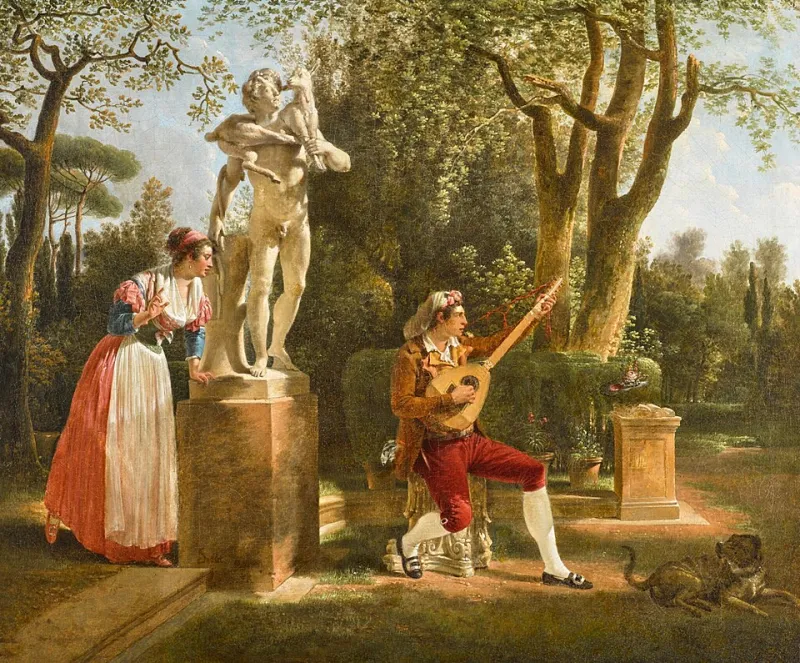
Photo: independent musician connecting with fans online streaming intimate concert, via wallpapers.com
There's a weird irony at the center of modern music. The artists who technically work alone — no label infrastructure, no A&R team, no marketing department — are somehow the ones surrounded by the most loyal, engaged, genuinely enthusiastic fans. Meanwhile, artists signed to major labels with millions in promotional spend behind them are watching their streaming numbers plateau and their comment sections go quiet.
This isn't a coincidence. It's a structural shift. And it's playing out everywhere from Spotify-connected bedrooms in Nashville to broadcast studios in Central Java.
The Label Promised a Crowd. It Delivered Strangers.
For most of the 20th century, the major label system was the only real path to a sustainable music career. The deal was simple: sign over a significant chunk of your creative control and your royalties, and in return, you got distribution, radio promotion, and the machinery of mass exposure. You'd get listeners. Millions of them, maybe.
What you didn't get was a relationship with those listeners.
The label model was always built around broadcast logic — push the signal out, measure how far it travels, repeat. There was no mechanism for feedback, no channel for actual conversation, no real way for an artist to know who was listening or why. Fans were essentially anonymous. They were units of consumption, not people.
Solo artists — working outside that system by necessity or by choice — never had that luxury. They had to actually talk to people. And it turns out, that constraint became their biggest competitive advantage.
What "Parasocial" Gets Wrong
You've probably heard the term parasocial thrown around a lot lately, usually with a slightly suspicious edge. The idea is that fans develop one-sided emotional attachments to creators who don't actually know them — a kind of emotional illusion that looks like community but isn't really.
That critique has some validity. But it misses something important about what's actually happening in the indie artist space right now.
The best independent artists aren't just broadcasting to their fans — they're genuinely responding to them. They're answering DMs at midnight. They're dropping unreleased demos into Discord servers and asking which mix people prefer. They're doing live Q&As where someone's question actually changes what gets recorded next. The relationship isn't perfectly symmetrical, sure. But it's not fake, either.
Over at Solo Radio, we've watched this dynamic play out in real time with artists from the Solo, Indonesia music scene who've found audiences in places like Austin, Portland, and Chicago. These aren't artists with massive followings. Some of them have a few thousand listeners scattered across time zones. But those listeners show up. They share. They buy the limited run merch. They leave comments that read like they're talking to a friend, because in a meaningful sense, they kind of are.
The Direct Drop Economy
One of the clearest signs that this shift is real and not just vibes is the economics. Independent artists are increasingly making more per listener than their major-label counterparts — not because they have more listeners, but because they've built the infrastructure for direct exchange.
Exclusive content drops on Patreon. Early access to singles for newsletter subscribers. Bandcamp Fridays, where artists keep the bulk of every sale. Limited physical releases that fans line up — virtually — to grab before they're gone. These aren't gimmicks. They're revenue streams that didn't exist a decade ago, and they're predicated entirely on the kind of trust that a label deal actively erodes.
When an artist you've followed for three years sends you a personal email saying "hey, I'm dropping something new next week and I wanted you to hear it first" — that lands differently than a Spotify algorithm surfacing a new track from a major-label act. The emotional weight is different. And emotionally weighted transactions convert.
Solo Radio's Unlikely Data Point
Here's something that surprised even us: some of the most engaged listener communities in our orbit aren't clustered around the most-played artists. They're clustered around mid-tier artists who've been consistently showing up — in our programming, in their own social channels, in direct communication with fans — for years.
One artist we've featured regularly, based out of Solo and making a kind of ambient gamelan-influenced electronic music that probably sounds niche on paper, has a listener group on WhatsApp with members from four different US states who organize listening parties when new material drops. Nobody told them to do that. Nobody from a label coordinated it. It just happened because the artist treated their listeners like people worth knowing.
That's the loneliness economy in action. People are hungry for real connection, and they're finding it in the most unexpected places — including a streaming feed from Central Java.
What This Means Going Forward
None of this means major labels are going away tomorrow. The infrastructure they provide still matters for certain kinds of scale. But the narrative that you need a label to have a meaningful career — or a meaningful community — is increasingly hard to defend.
The artists who are winning right now aren't necessarily the ones with the biggest platforms. They're the ones who figured out that depth beats breadth, that a thousand fans who genuinely care about your work are worth more than a million passive streams, and that the tools to build that kind of relationship have never been more accessible.
Solo artists, in every sense of the word, are proving it every day. And honestly? It's one of the more hopeful things happening in music right now.