The Quiet Flex: Why Silicon Valley Engineers Are Wearing Their Radio Habits Like a Badge
The Headphones Tell the Story
It usually starts as a throwaway comment in a standup meeting. Someone asks what you're listening to, expecting Spotify or maybe a true crime podcast. Instead, you say something like, "A radio station out of Central Java." The silence that follows — that half-second of genuine confusion — is, apparently, the whole point.
Across Silicon Valley and its satellite offices in Austin, Seattle, and New York, a specific kind of listener has been quietly building a habit. They're tuning into international radio streams that no algorithm served them, no influencer recommended, and no playlist curator assembled. They found it themselves. And among a certain subset of engineers, designers, and product managers, that distinction matters enormously.
Solo Radio — broadcasting out of Solo, Indonesia, a city most Americans couldn't locate on a map without help — has become, for a small but vocal group of tech workers, something closer to a lifestyle signal than a music source.
Anti-Mainstream as the New Mainstream
This isn't entirely new territory. Taste has always been political in some sense — what you consume says something about who you are, or at least who you want to be. But what's shifted is the direction the arrow points.
For the better part of two decades, cultural credibility in tech circles tracked upward toward volume and access. The person with the biggest Spotify library, the most niche festival stamps on their passport, the most obscure Bandcamp follows — they won the taste game. Discovery was the currency, but it was still discovery happening inside a system built to funnel you somewhere predictable.
Now, a growing number of millennials and Gen Z workers are pushing back against that entire framework. The rejection isn't loud or particularly organized. It's more like a slow exhale — a quiet decision to step outside the recommendation engine entirely and find something that feels genuinely unmediated.
"I got tired of being surprised by things that were designed to surprise me," says Marcus, a 31-year-old software engineer based in San Jose who asked to use only his first name. "There's a difference between discovering something and being discovered-at. Solo Radio felt like the former."
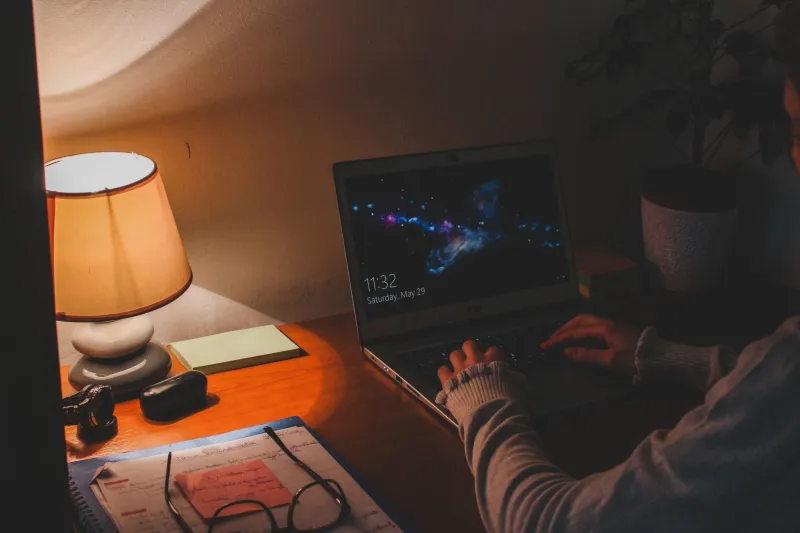
He stumbled onto the station during a late-night debugging session about eight months ago, searching for something — anything — that didn't feel like it had been pre-approved for his demographic. He found a stream of Javanese pop blended with ambient instrumentals, a host speaking in Bahasa Indonesia, and the low-grade electric hum of a city he'd never visited. He kept it on for four hours.
The Insider Knowledge Effect
Psychologists have a term for the satisfaction Marcus is describing: the discovery premium. It's the extra emotional value we assign to things we feel we found through genuine curiosity rather than passive consumption. And in a world where nearly everything is surfaced, sponsored, or subtly pushed, the discovery premium on something like an Indonesian radio station is remarkably high.
But there's a social layer on top of that. Among the engineers and designers who've adopted international radio as a listening habit, there's an unmistakable awareness of how it reads to others. It's an anti-status symbol that functions exactly like a status symbol — which is to say, it signals something specific about the person wearing it.
"It's a little ironic, right?" admits Priya, a UX designer at a mid-size tech firm in the South Bay. "I know it sounds like a flex. But I also genuinely love it. I'm not going to pretend I don't notice that it makes for a good conversation starter."
What it signals, she says, is a specific kind of intellectual curiosity — the kind that doesn't need validation, doesn't require a trending hashtag, and isn't waiting for someone else to greenlight the experience. In an industry that prizes first-mover advantage professionally, applying that same energy to cultural consumption feels natural.
What Solo Actually Sounds Like at Midnight
It's worth being concrete here, because the appeal isn't purely abstract. Solo Radio's programming has a texture that's genuinely difficult to replicate through algorithm. The music shifts across the broadcast day in ways that feel human rather than optimized — traditional gamelan bleeds into contemporary R&B-inflected pop, a news segment in Bahasa Indonesia gives way to something that sounds like a late-night jazz hour recorded in a room slightly too small for it.
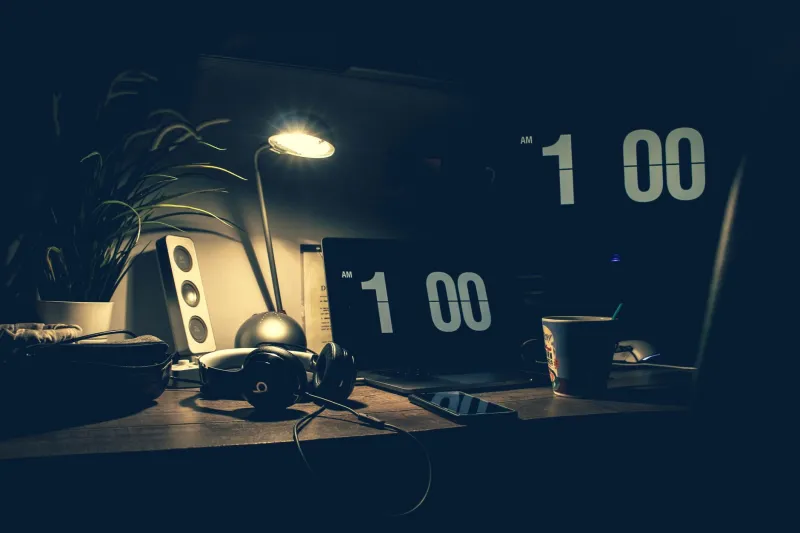
For American listeners, especially those working late in time zones that align with Solo's daytime programming, there's an additional layer of resonance: the city is awake while you're grinding. Someone in Central Java is curating a morning show while you're writing code at 1 a.m. in Sunnyvale. That temporal inversion — the sense of being connected to a place living a completely different version of the same day — is part of what keeps people coming back.
"It resets something in my brain," says Daniel, a backend engineer who works remotely from Portland. "I'm not in Silicon Valley anymore. I'm not in the grind. I'm just... somewhere else. And somehow that makes the work easier."
When the Niche Becomes the Point
There's a version of this story where the trend eventually collapses under its own self-awareness — where enough people adopt the habit that it loses the quality that made it appealing in the first place. That's the usual arc for anything that functions as a cultural signal.
But Solo Radio has something working in its favor: it's genuinely, structurally niche. It's not a brand waiting to be scaled. It's a radio station rooted in a specific city, a specific culture, a specific daily rhythm. That rootedness is resistant to the kind of mass adoption that tends to dilute things.
You can't manufacture what makes it feel authentic, and you can't replicate it with a playlist. That's not a limitation — it's the whole product.
For the engineers tuning in during the quiet hours, that's exactly the point. In an industry built on scalability, they've found something that doesn't want to be scaled. Something that exists, fully and specifically, seven thousand miles away — and somehow fits perfectly into the gap between midnight and morning.
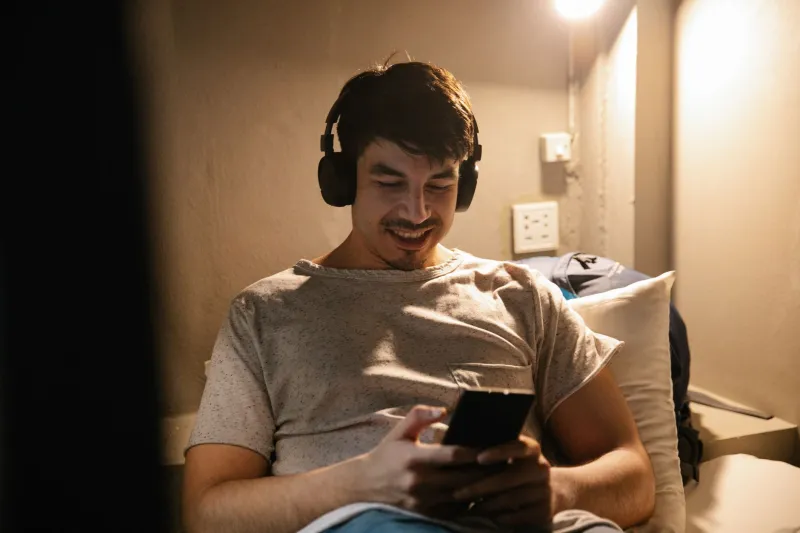
The headphones go on. The stream loads. Solo wakes up.
And somewhere in the South Bay, someone finally stops thinking about the algorithm.