Live from Java, Working Late in Jersey: The Surprising Productivity Secret Hidden Inside Real-Time Radio
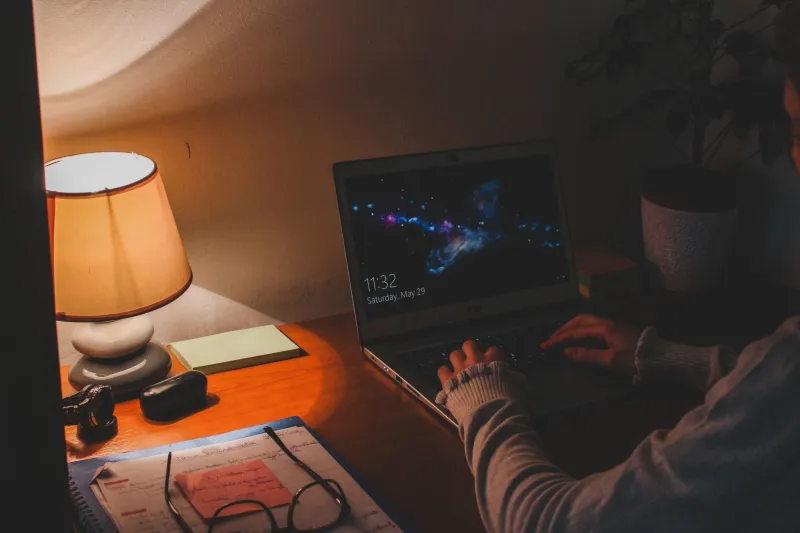
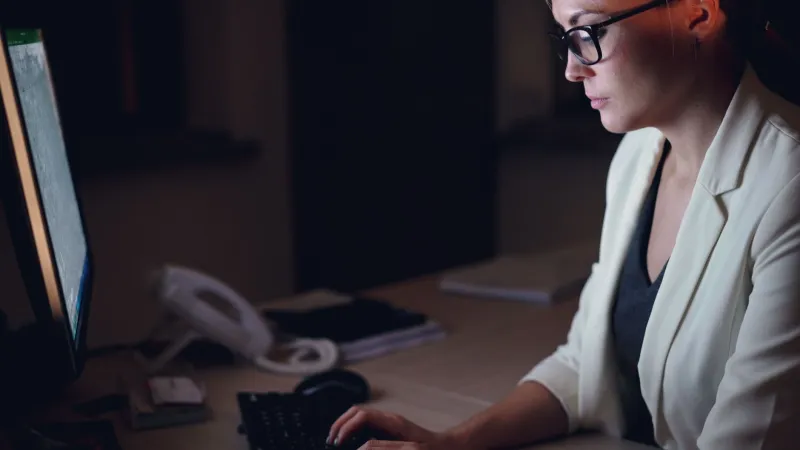
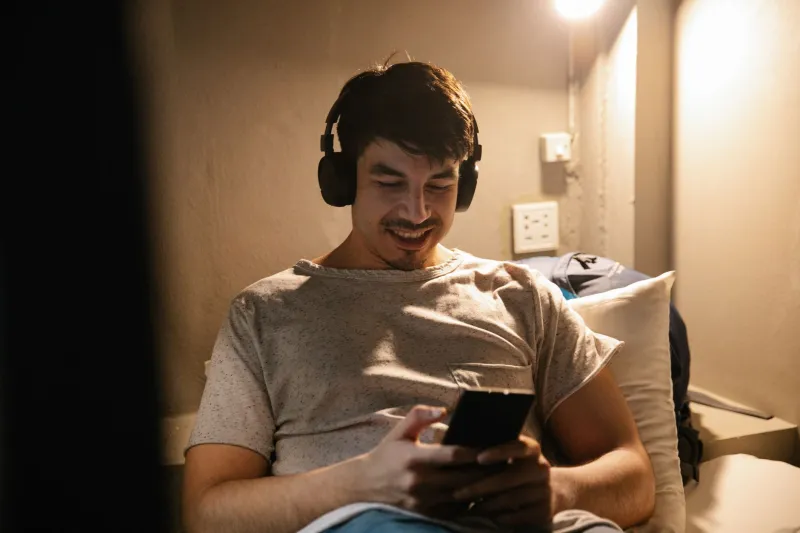
It's 1:47 AM in Columbus, Ohio. Marcus, a freelance data analyst, has three spreadsheets open and a deadline that doesn't care what time zone he's in. His coffee is lukewarm. His playlist ran out of steam an hour ago. And yet — somehow — he's in a groove. Not because of anything he did, exactly, but because of a voice drifting through his headphones from a radio studio in Solo, Indonesia, where it's already mid-afternoon and someone is laughing at a caller's story about a motorbike and a missing helmet.
Marcus has no idea what's being said. He doesn't speak Javanese. Doesn't matter. He's locked in.
"There's something about knowing it's actually happening right now," he says. "Someone is live. It's not a recording. It's not curated. That changes everything."
He's not alone in noticing this, and science is starting to catch up to what night owls and remote workers have been quietly discovering for themselves.
The Problem With Silence (And the Other Problem With Everything Else)
For years, the productivity conversation has been stuck in a loop. Silence is great — until it isn't, and every small sound becomes a distraction. Ambient music helps — until the same lo-fi playlist you've heard 400 times starts to feel like wallpaper you've stopped seeing. White noise apps are fine — until they feel so empty that your brain starts filling the void with its own anxious chatter.
None of these options solve the same problem in the same way. Because the problem isn't really about sound. It's about presence.
Dr. Leanne Forsythe, a cognitive neuroscientist based in Portland who studies attention and environmental audio, puts it plainly: "The human brain is a social organ. It's always scanning for signals of other people — are there others nearby, are they calm, is the environment safe enough to focus? When you remove all human signal entirely, the brain doesn't necessarily relax. For a lot of people, it goes looking."
That looking, she explains, is expensive. It burns cognitive resources that could otherwise go toward actual work.
Enter the Parallel Companion
What live radio from a place like Solo does — and this is the part that trips people up at first — is provide what researchers are starting to call parallel companionship. It's not the same as background TV, which pulls visual attention. It's not the same as a podcast, which demands comprehension. It's a human presence operating in real time, doing its own thing, completely indifferent to your deadline.
And that indifference, counterintuitively, is the whole point.
"When you're listening to a live broadcast and the host goes off on a tangent or a song ends and there's a beat of dead air before the next one drops, your brain registers that as authentic human behavior," says Jordan Kessler, a workplace performance coach who works with remote teams across the US. "It's not engineered. It's not optimized for you. And that actually frees you up, because your brain isn't waiting for something to happen. It already trusts the environment."
Kessler started recommending international live radio to clients about two years ago, mostly as a half-joking suggestion for people who complained that every productivity tool felt too deliberate. The response surprised him. Several clients reported measurably longer focus sessions and a reduction in what he calls "attention drift" — that thing where you're technically working but mentally somewhere else entirely.
Why the Distance Actually Helps
There's another layer here that's worth sitting with. The fact that the broadcast is coming from Solo — from Central Java, from a city most American listeners couldn't place on a map — creates a specific kind of psychological safety that a local radio station doesn't quite replicate.
When you're listening to a station from your own city or region, there's an ambient awareness of relevance. A traffic report matters. A local ad might catch your attention. A familiar song carries an association. The content has hooks into your life, and those hooks are exactly the kind of thing that pulls focus sideways.
A live broadcast from 9,000 miles away has none of those hooks. The music is interesting but unfamiliar. The conversation is warm but unintelligible. The cultural references slide right past you. What remains is pure texture — the sound of human activity, happening now, in a place that has nothing to do with your inbox.
"It's almost like the distance is the feature," Dr. Forsythe says. "You get all the neurological benefit of human presence without any of the cognitive load of actually processing what's being said."
The Live Element Is Non-Negotiable
Here's where it gets specific, and where recorded ambient tracks and AI-generated "café sounds" fall short: it has to be live.
Recordings, no matter how well produced, carry a subtle flatness that the brain eventually recognizes. The rhythms are too consistent. The pauses are too predictable. There's no moment where a host laughs at something unexpected, or a song gets faded out a few seconds early, or someone in the studio says something off-mic that bleeds through anyway.
Those imperfections are doing real work. They're the signal that says: this is happening right now, and it's real.
Marcus figured this out on his own after spending months testing different audio setups. "I tried the rain sounds, I tried the coffee shop apps, I tried everything. The only thing that actually kept me in the zone for hours at a stretch was live radio. And the further away it was, the better it worked. There's something about Solo specifically — the pacing of the shows, the way the hosts talk to each other — it just fits."
What This Means for How We Think About Work
The broader implication here is worth paying attention to. American work culture has spent years optimizing for individual productivity — better apps, better tools, better systems. But what a lot of workers are quietly discovering is that the body and brain aren't actually built for the kind of isolated, silent, purely individual output that remote work often demands.
We need a sense of co-presence. We need to feel like we're working alongside something, even if that something is a radio host in Central Java talking about the weather in Javanese.
Kessler thinks this is going to reshape how productivity advice gets dispensed. "We're going to stop telling people to just eliminate all distractions and find the right app. We're going to start asking: what kind of human environment does this person need to thrive? And for a lot of people, the answer is going to be something live, something human, and something that doesn't demand anything from them in return."
For now, Solo Radio is quietly filling that role for more American listeners than anyone might expect — one late-night work session at a time, broadcasting live from a city that's already in tomorrow, keeping company with people who are still trying to get through today.
Not a bad arrangement, when you think about it.