When the Clock Hits Midnight, These American Workers Are Already Tuned In to Java
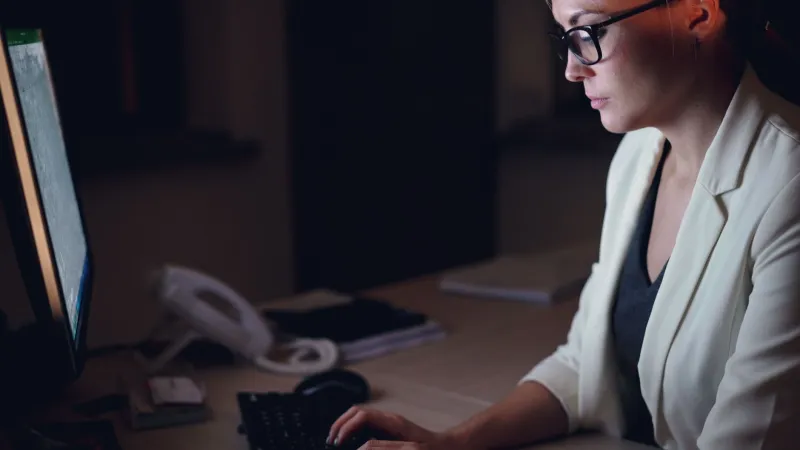
There's a particular kind of silence that settles over a home office at 2 AM. The neighborhood's gone dark. The group chats have gone quiet. The rest of the country is asleep, and you're still at your desk, staring at a screen, trying to stay sharp for another four hours.
For a growing number of Americans working overnight shifts — whether that's remote customer service, gig economy logistics, overnight healthcare coordination, or late-stage startup hustle — that silence used to be the enemy. Podcasts got boring after the first hour. Spotify playlists looped back on themselves. Even the most curated ambient stations felt sterile, like elevator music for a building nobody was in.
Then, somehow, Solo Radio showed up.
The Third-Shift Boom Nobody Saw Coming
The overnight workforce in America has been quietly expanding for years, but remote work turbocharged it. When your employer is three time zones away, or your clients are in Europe, or your gig platform pings you for jobs at any hour of the day, the traditional nine-to-five starts to feel like a relic. The Bureau of Labor Statistics has tracked steady growth in non-traditional shift work, but the real numbers are harder to pin down — because a lot of this labor is happening in spare bedrooms and kitchen tables, invisible to standard metrics.
What these workers share, though, is a need for audio companionship that doesn't demand too much. You can't really follow a true-crime podcast when you're also troubleshooting a server error. You can't vibe to a DJ set that hits every drop like a jump scare. You need something that breathes — something with a rhythm that doesn't compete with your own.
That's where Solo Radio comes in, almost by accident.
"It Doesn't Try to Hype Me Up"
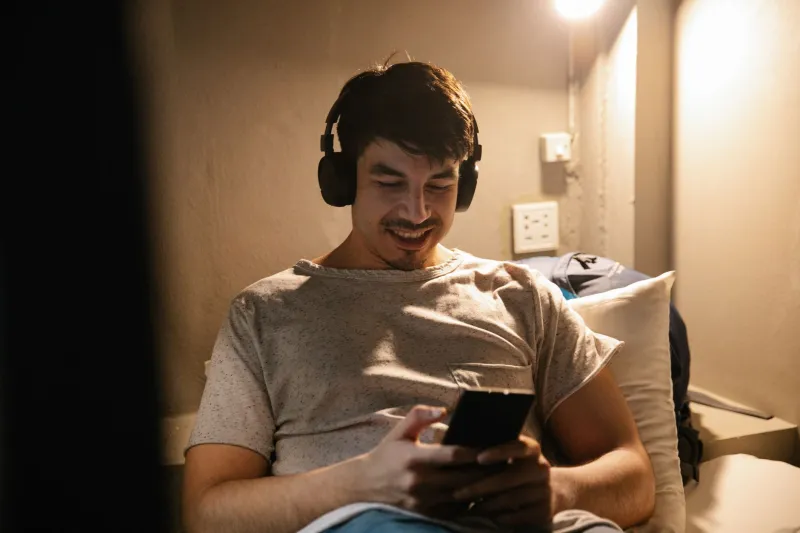
Marcus, a remote IT support specialist based in Columbus, Ohio, stumbled onto Solo Radio through a music discovery rabbit hole around eighteen months ago. He works 11 PM to 7 AM supporting enterprise clients across Southeast Asia — which means his schedule already has a foot in that part of the world.
"I was looking for something that felt alive," he said. "Not a playlist. Not a bot. An actual station where someone was making decisions in real time. And Solo Radio just... fit. There's something about the pacing. The way they'll play a local track, then cut to what sounds like a community announcement in Javanese, then come back with something that sounds almost like dream pop. You never quite know what's next, and that keeps your brain just engaged enough."
That unpredictability is the thing listeners keep coming back to. American radio — what's left of it — has been optimized into a corner. Tight playlists, predictable rotations, the same twelve songs cycling through every three hours. It's efficient. It's also numbing.
Solo Radio doesn't operate that way. Programming reflects the rhythms of a city — Solo, or Surakarta, in Central Java — that has its own cultural calendar, its own musical traditions, and its own sense of time. For overnight workers in the US, that foreign rhythm becomes, paradoxically, a grounding force.
The Commute That Doesn't Move
There's a concept researchers have started calling the "third space" of remote work — the psychological buffer that used to be filled by a commute. When you drove to the office, that thirty-minute stretch of radio was a transition ritual. It told your brain: work mode is starting or work mode is ending. Remote work stripped that out entirely, and a lot of people are still recovering from the loss.
Listeners describe tuning into Solo Radio as a kind of replacement ritual. It's not just background noise. It's a signal — literal and psychological — that you've entered a different mode.
Jenna, a freelance medical transcriptionist in Phoenix who works from midnight to 5 AM, put it plainly: "I open my laptop, I pull up Solo Radio, and something in me just shifts. It's like the station is my commute now. I'm not going anywhere, but I'm going somewhere."
She laughs a little at how that sounds. But she's not wrong. The act of tuning into a broadcast that's originating from the other side of the planet — where it's already mid-afternoon, where the city is humming with entirely different energy — creates a genuine sense of movement. You're not stuck in your spare room. You're connected to a place that's wide awake.
What Solo Radio Gets Right That American Stations Don't
It's worth being honest about what's happening here, beyond the novelty factor. Solo Radio isn't doing anything magical. It's doing something simple, and doing it well.
There's a human hand on the dial. Programmers making choices. Local news and cultural commentary woven into the music. The station sounds like it comes from somewhere — a specific city, a specific community, a specific moment in time. That specificity is rare now. Most streaming audio has been sanded down to a universal smoothness that belongs nowhere in particular.
For overnight workers who often feel like they exist outside of normal time — eating breakfast at sunset, sleeping through the morning, watching the world operate on a schedule that no longer applies to them — there's something deeply comforting about a station that also operates on its own clock. Solo Radio isn't trying to be everywhere. It's proudly, stubbornly from somewhere.
And that somewhere, it turns out, is exactly where a lot of exhausted, isolated, middle-of-the-night American workers needed to land.
The Signal Keeps Going
There's no tidy conclusion to this story, because it's still unfolding. More people are working overnight than ever before. More of them are looking for audio that doesn't feel like content — that feels like company. And a radio station in Central Java, streaming worldwide, keeps showing up in their earbuds at 3 AM.
Marcus summed it up the way a lot of listeners do, with a kind of bemused gratitude: "I don't understand half of what's being said. But I understand the feeling. And at 4 AM, that's enough."
The heartbeat of Solo, it turns out, has a way of syncing up with yours — no matter what time zone you're in, or what shift you're pulling.