When a Human Picks the Next Song, Something Different Happens to Your Brain
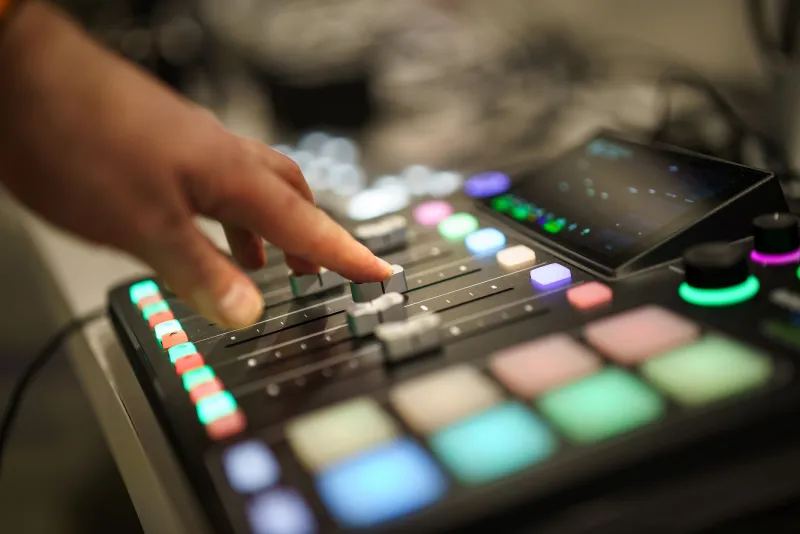
There's a moment that regular Solo Radio listeners talk about — that specific feeling when a song you've never heard before comes on and somehow, inexplicably, it fits. Not because an app noticed you'd been playing similar tracks on repeat. Not because a popularity score nudged it into your feed. But because someone, somewhere in Central Java, made a deliberate choice to put it there, right after the song that just ended, for reasons that only make sense if you've been paying attention.
That feeling has a name in psychology. Researchers call it "parasocial discovery" — the sense that a trusted, human voice guided you to something new. And it turns out, it hits very differently than clicking "Enhance" on a Spotify playlist.
The Difference Between Prediction and Perspective
Algorithms are genuinely impressive. Spotify's Discover Weekly has introduced millions of people to artists they now love. Apple Music's recommendation engine is sharper than it's ever been. These tools are built on billions of data points, trained to identify sonic patterns, tempo clusters, and listener behavior at a scale no human programmer could match.
But here's what they're actually doing: predicting your preferences based on your past behavior. They're drawing a line from where you've been to where you're probably going. That's useful. It's also, by definition, backward-looking.
Human curation works from a completely different starting point. A programmer at Solo Radio isn't asking "what has this listener already responded to?" They're asking something more like: what should this listener hear right now, given everything happening in this moment — the time of day, the cultural context, the emotional register of the hour, the story this set of songs is trying to tell?
That's not prediction. That's perspective. And perspective is something algorithms are still trying to figure out how to fake.
The Cohesion Problem
Here's a small experiment worth trying. Open any algorithmically generated playlist — your Daily Mix, your Vibe playlist, whatever the platform calls it — and just notice how it moves. Chances are it's technically accurate. The tempos probably cluster. The genres don't clash. But there's often something slightly off about the sequencing, a flatness to the transitions, a sense that each track exists in its own bubble rather than as part of a larger conversation.
Solo Radio doesn't have that problem. The station's programming — rooted in the music scene of Solo, Indonesia, but increasingly reaching listeners in the US and beyond — has a sonic identity that feels like a coherent point of view. You might hear a traditional Javanese gamelan influence bleeding into a contemporary indie pop production, followed by something that sounds like it could have been recorded in a bedroom studio in Brooklyn, followed by something that makes absolutely no sense until, somehow, it makes total sense.
That coherence isn't accidental. It's the product of programmers who have spent years developing a curatorial voice — an aesthetic sensibility that listeners eventually learn to trust. When you trust the source, you follow it somewhere you wouldn't have gone alone.
Why Americans Are Hungry for This Right Now
American radio has been in a strange place for a while. Consolidation gutted local programming. Automation took over overnight shifts, then morning shows, then everything in between. The result is a landscape where most commercial stations sound interchangeable — the same thirty songs, the same format, the same energy, coast to coast.
Streaming was supposed to fix this by giving listeners infinite choice. And it did, technically. But infinite choice turns out to carry its own kind of fatigue. When everything is available, nothing feels curated. You end up in a loop of familiar favorites because the algorithm learned that's what keeps you from churning.
Something interesting has happened in response: listeners are actively seeking out voices they can trust to make decisions for them. Podcast listeners have been doing this for years — following a host not just for information but for their editorial judgment, their personality, their willingness to say "this matters, pay attention." Radio, at its best, always worked this way too.
Solo Radio landed in this moment at exactly the right time. American listeners who found the station — often through social media clips, word of mouth, or just stumbling down a YouTube rabbit hole — didn't just find new music. They found a curatorial perspective that felt genuinely different from anything available on domestic radio. Foreign enough to be surprising. Human enough to feel trustworthy.
The Trusted Voice Effect
There's a reason people still talk about legendary radio DJs the way they talk about great music critics or tastemaker record store clerks. John Peel. Frankie Knuckles. Even more recently, figures like Zane Lowe. What these programmers had wasn't just access to music — it was conviction. They believed in what they played. You could feel that belief through the speakers.
When belief is present, the listener's brain responds differently. Research on parasocial relationships suggests that when we perceive a human intelligence on the other end of a media experience, we engage with the content more deeply, remember it more vividly, and form stronger emotional associations with what we discover. The music doesn't just play. It arrives.
Algorithms can approximate warmth. They can personalize. They can get scarily accurate at predicting what you'll skip. But they can't believe in anything. They have no stake in whether you love the song they just served you. A programmer in Solo, Indonesia, putting together a set at midnight their time so it lands right during a listener's afternoon commute in Chicago — that person has a stake in it. You can feel the difference.
What This Means for Audio's Future
The streaming platforms aren't going anywhere, and nobody at Solo Radio is arguing they should. The tools are too useful, the catalogs too vast, the convenience too real. But what's becoming clearer is that algorithmic delivery and human curation aren't really competing for the same thing.
Algorithms are infrastructure. Human curation is experience.
The stations and shows and channels that are growing right now — the ones developing genuine, loyal audiences — almost all have a strong curatorial identity at their center. A real person, or a small team of real people, making deliberate choices and letting those choices accumulate into something that feels like a relationship.
Solo Radio built that relationship from a city most Americans couldn't have found on a map five years ago. It grew not because of marketing spend or platform promotion, but because the programming had a voice. A consistent, curious, occasionally surprising voice that listeners in Des Moines and Denver and Durham decided they wanted in their ears.
The algorithm didn't give them that. A human did.
And for a lot of people, that turns out to make all the difference.