Living 12 Hours Ahead: The Unlikely Productivity Hack Hidden Inside a Time Zone Gap
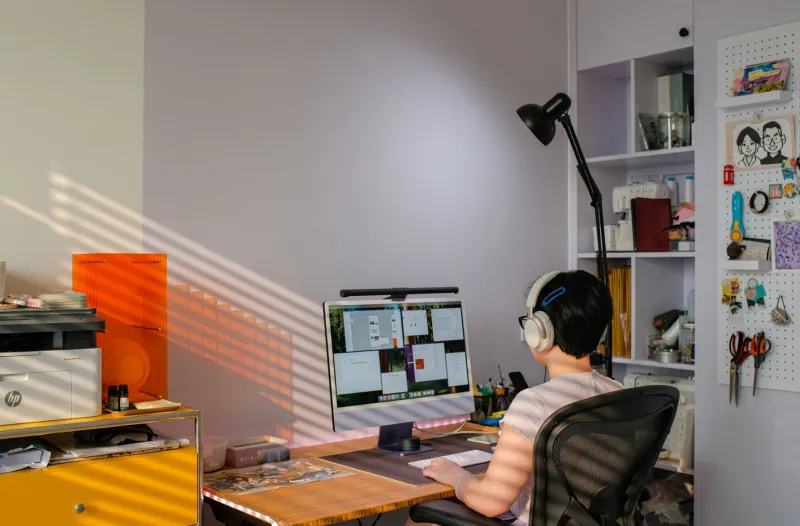
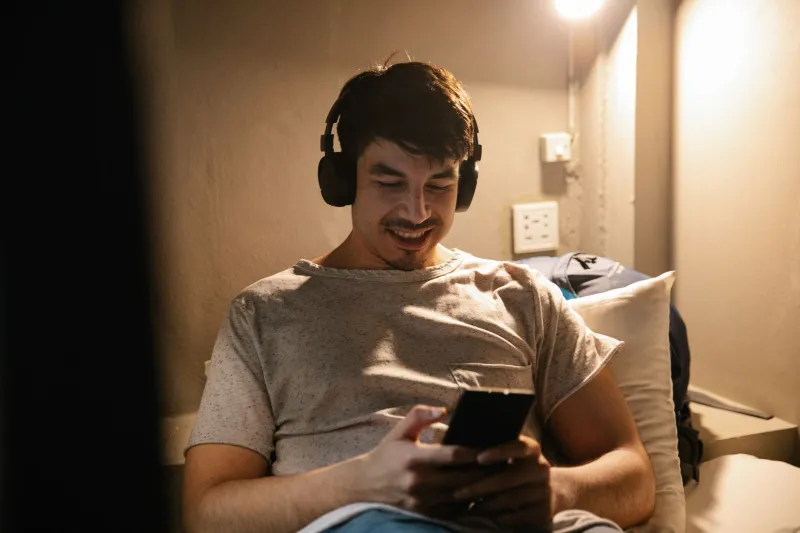
Every morning in Solo, Indonesia, the city is already well into its afternoon before most Americans have finished their first cup of coffee. By the time a software engineer in Austin sits down at her desk, the DJs on Solo Radio have already curated a full day's worth of music, reacted to local news, and shaped the cultural mood of an entire city. She's listening to the echo of a day she hasn't lived yet.
That framing — consuming content from a time zone that's already ahead of you — turns out to have some interesting implications for how Americans work, create, and think. And a growing number of people are starting to notice.
The Novelty Effect Is Real, and It Has a Mechanism
Neuroscientists have a term for the brain's response to genuinely new stimuli: the orienting response. When you encounter something unexpected — an unfamiliar musical structure, a language you don't fully understand, a cultural reference that doesn't map onto anything you already know — your brain pays attention in a different, more alert way than it does when processing familiar content.
This isn't subtle. It shows up in EEG studies as measurable spikes in neural activity. It's associated with increased dopamine release and, perhaps more importantly for knowledge workers, with a temporary boost in divergent thinking — the kind of loose, associative cognition that produces creative ideas.
Solo Radio, streaming music rooted in Central Javanese culture alongside contemporary Indonesian pop and indie, delivers a near-constant stream of this kind of novelty to American ears. The musical scales are different. The production choices don't follow Western pop conventions. The DJ patter is in a language most American listeners don't speak. All of it is mildly, pleasantly unfamiliar — which is exactly what the orienting response needs to kick in.
Dr. Anya Reyes, a cognitive psychologist who studies audio environments and workplace performance (and who, full disclosure, told us she started listening to Solo Radio after a colleague recommended it), puts it simply: "Mild novelty without high cognitive demand is kind of a sweet spot for background listening during creative work. You're engaged enough to stay alert, but not so engaged that you're splitting your attention."
The Circadian Dimension
Here's where it gets a little more specific. The time zone gap between Solo and the continental United States — roughly 12 hours — means that Solo Radio's programming schedule almost perfectly inverts the American one. When it's morning rush hour in Solo, it's evening in New York. When Solo's afternoon programming rolls out, Americans are waking up.
For early risers in particular, tuning into Solo Radio during the first hours of the workday means consuming content that was created during what amounts to tomorrow's afternoon. There's a mild psychological effect to that — a sense of temporal dislocation that some listeners describe as freeing.
"It sounds strange, but it genuinely makes me feel less pressured by my own day," said Priya Nair, a UX researcher in San Francisco who starts her workday at 6 AM. "I'm listening to music from a place that's already had its Tuesday. It makes my Tuesday feel less like a deadline and more like something I'm easing into."
This isn't just vibes. Research on temporal distancing — the psychological technique of imagining yourself at a remove from a stressful present moment — consistently shows that it reduces anxiety and improves decision quality. Listening to content anchored in a different time and place creates a low-grade version of this effect automatically.
What 'Future-Listening' Does to Decision-Making
The competitive angle here is something that knowledge workers in particular are starting to talk about, quietly, in the way people talk about productivity hacks before they go mainstream.
The argument goes like this: the music and cultural trends that are currently popular in Solo will, in some cases, influence global taste within months. Indonesian pop and indie scenes have shown a consistent pattern of anticipating broader Asian musical trends, which then surface in Western markets through K-pop adjacency, streaming algorithm spread, and the general flattening of global culture. Listening to Solo Radio isn't just pleasant background music — it's a low-cost, high-enjoyment form of early cultural intelligence.
This might sound grandiose for a radio stream. But consider: the people most likely to notice emerging trends are the ones who are already paying attention to the edges of culture. And there are few edges more genuinely underexplored by American ears than a thriving regional music scene in Central Java.
Tyler Okafor, a creative director at a mid-sized agency in Chicago, started listening to Solo Radio six months ago on a whim. He's since referenced Indonesian musical aesthetics in two client presentations — once for a lifestyle brand looking to differentiate, once for a tech company that wanted its product launch to feel "globally aware but not generic."
"I'm not saying I'm predicting the future," he said. "I'm saying I have references that other people in my industry don't have yet. That's worth something."
The Practical Upside of Structured Uncertainty
There's one more productivity angle worth naming, and it's the most counterintuitive one: not being able to fully control or predict what comes next.
Algorithmic playlists are optimized for your preferences. They give you more of what you've already liked. This is comfortable, but comfort isn't the same as productive engagement. Live radio — especially live radio from a station you didn't grow up with — is structurally unpredictable. You don't know what the next song will be. You can't skip it. You can't rewind.
That constraint, for many listeners, turns out to be a feature. It trains a kind of receptive patience — the willingness to sit with something unfamiliar and let it develop — that directly maps onto the skills required for deep work. Staying with a complex problem. Not jumping to the first solution. Letting an idea breathe before you act on it.
Solo Radio, streaming from 12 hours away, offers all of this for free, every day, to anyone with an internet connection and a pair of headphones. The time zone gap isn't a quirk. For a lot of American workers, it's turning into the whole point.