First Name Basis: Why Commuters Are Dumping Podcasts for DJs Who Actually Talk Back
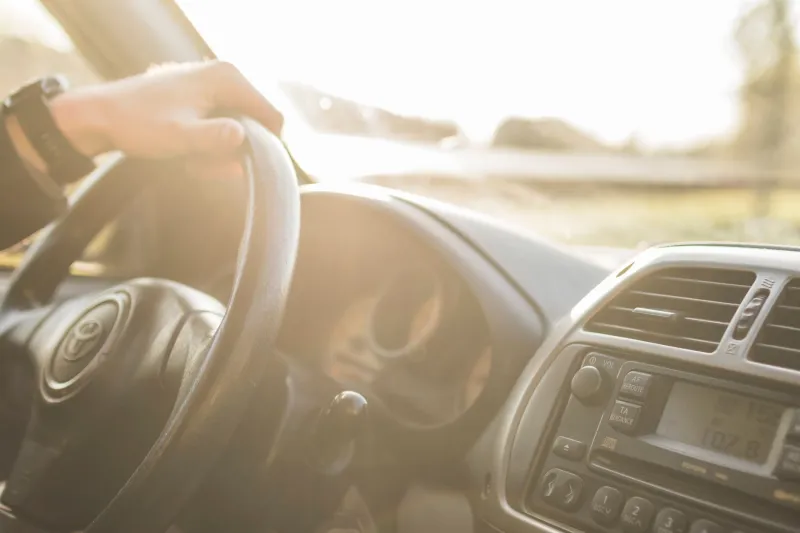
Somewhere on the I-405, stuck between two lanes of red taillights, Marcus Webb made a decision that changed his mornings for good. He closed out the podcast he'd been half-listening to for three weeks — the one with 47 episodes still in the queue — and tuned into a live stream from Solo, Indonesia. Within ten minutes, a DJ named Reza read his name on air.
"I texted in a request just to see if it would work," Marcus told us. "He actually said my name. I was sitting in traffic, alone, and I laughed out loud. That hadn't happened to me during a commute in years."
Marcus isn't alone. Across the country, a quiet but real migration is happening — away from the polished, algorithm-friendly world of podcasts and toward live, interactive radio experiences. And for a surprising number of American listeners, the destination is Solo Radio, streaming out of Central Java, Indonesia, 12 time zones away.
The Problem With Podcasts Nobody Wants to Admit
Podcasts are great. Nobody's taking that away. But there's a specific kind of loneliness baked into them that we don't talk about enough. You're consuming something that was made weeks or months ago, edited into a tidy package, and shipped out to millions of people simultaneously. The host doesn't know you're listening. They recorded that episode in their pajamas on a Tuesday and went on with their life.
For casual entertainment, that's fine. For a commute — 25, 40, sometimes 60 minutes of time that already feels isolating — it can quietly make things worse.
Research from the University of Chicago on social isolation and media consumption suggests that parasocial relationships, the kind we form with media personalities, feel more meaningful when there's even a small element of perceived reciprocity. In other words: when the person on the other end seems to know you're there, your brain responds differently. It stops treating the experience as passive consumption and starts treating it like connection.
Live radio, almost by definition, creates that perception. Someone is in the booth right now. The song playing was chosen minutes ago. And if you text in? There's a real chance your name gets said out loud.
What Solo Radio Does That Most American Stations Stopped Doing
Here's the thing about a lot of American radio in 2024: it's not really live anymore. Many stations use voice-tracking technology, where DJs pre-record their between-song chatter and software drops it in at the right moment. It sounds live. It isn't.
Solo Radio — broadcasting from Solo (officially Surakarta) in Central Java — still does it the old way. Real DJs, real time, real conversations with listeners who text and message in from wherever they happen to be on the planet. The station has built its international following partly on this authenticity, and American listeners have picked up on it fast.
Jamila Torres, a teacher in Phoenix who commutes 35 minutes each way, started listening after seeing a Reddit thread about international radio. "I didn't expect to feel anything," she said. "I don't speak Indonesian. But the DJ's energy was so real. And when I texted in and he said my name and played something I asked for, it was — I don't know, it was warm. It felt like being seen."
That warmth is intentional. Solo Radio's programming has always centered on community. It grew out of a city with a strong tradition of communal cultural life — the kind of place where a radio station isn't just background noise, it's a meeting point. That ethos travels well, it turns out.
The Shout-Out Economy
There's a whole micro-culture forming around listener interaction with Solo Radio's international audience. Regulars have inside jokes with DJs. Listeners from different American cities recognize each other's usernames in the chat. Some have started coordinating — "tune in Thursday morning at 7 AM EST, that's when the request window opens" — like they're trying to catch a limited drop.
David Kim, who drives for a rideshare company in Seattle, says he's built a loose community of fellow listeners he's never met in person. "We're all just people commuting or working, scattered everywhere, but we're all in the same chat at the same time listening to the same thing. That's actually pretty rare these days."
He makes a fair point. Most digital media experiences are asynchronous — you watch the video when you want, you listen to the episode when it suits you. Live radio is synchronized. Everyone is in the same moment together, and that shared experience creates something closer to genuine community than a comment section ever will.
Why the Commute Is the Perfect Time for This
There's a reason commuting and radio have always gone together. The commute is a transitional space — you're neither at home nor at work, neither fully relaxed nor fully focused. It's a psychological liminal zone, and humans don't love liminal zones. We fill them.
Podcasts fill them with information or storytelling, which is useful. But live, interactive radio fills them with presence. There's a difference between knowing something is happening out there in the world and feeling like you're part of something happening right now.
For commuters tuning into Solo Radio, that real-time connection to a city on the other side of the planet during their own mundane Tuesday morning commute creates a kind of cognitive contrast that's genuinely energizing. You're stuck in traffic in Cleveland, and simultaneously, a DJ in Central Java is saying your name and spinning a song you asked for. The world suddenly feels a lot more interesting than the bumper sticker in front of you.
Marcus, the guy on the I-405 who started all this, still tunes in every morning. "I've started looking forward to my commute," he said, and then laughed a little at how weird that sounded. "I know. But it's true."
Maybe that's the simplest measure of whether something is working.