When 3 AM Here Is 3 PM There: The Strange Creative Alchemy of the Solo-to-America Time Gap
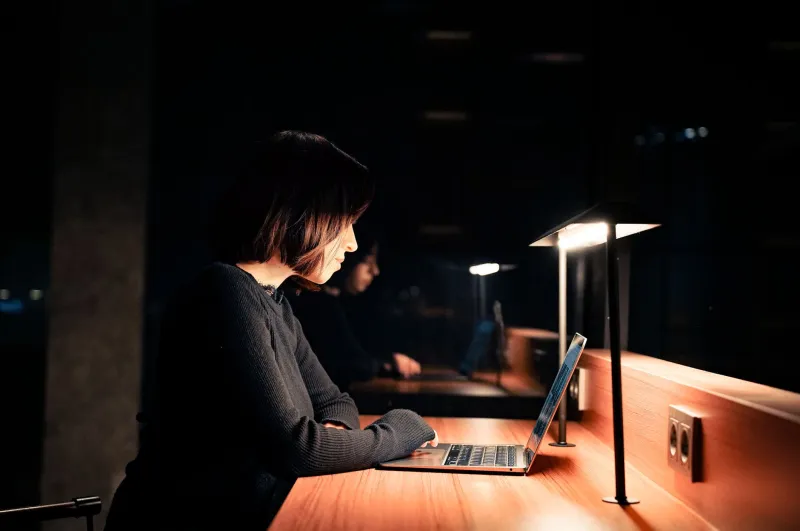
There's a moment that happens for a lot of people around 2 or 3 in the morning. The city goes quiet. The notifications stop. The obligations of the day have either been met or surrendered. And something in the brain shifts — a loosening, a different kind of alertness. Some people dread it. Others have started to build their whole creative life around it.
For a growing number of Americans — night-shift workers, insomniacs, early-morning creatives, and people who simply work better when the world isn't watching — Solo Radio has become the unlikely soundtrack to that liminal hour. And the reason has everything to do with a quirk of geography: when it's 3 AM on the East Coast, it's 3 PM in Solo, Indonesia. Prime time.
The Accidental Synchrony
Solo Radio broadcasts live from Central Java. Its DJs are awake, engaged, and in full flow during what amounts to the dead of night for most Americans. The station isn't designed for a US audience — it's built for Solo and the surrounding region. But the global stream means anyone can tune in, and the time zone math has created something unexpected: an American night-shift community with a real-time radio station that's actually live when they need it.
"Every other station I tried at that hour was either automated playlists or pre-recorded programming," says Terrence Holt, a registered nurse in Baltimore who works overnight shifts three nights a week. "Solo Radio is actually happening. Someone is there. Someone is talking, making decisions, reacting to stuff. It feels alive in a way that nothing else at 2 AM does."
That quality — liveness, presence, the sense of a broadcast happening in real time — turns out to be psychologically significant in ways that are hard to quantify but easy to feel.
The Night Shift's Particular Problem
Working against the clock is genuinely hard. Humans are diurnal creatures; our bodies are wired to sleep when it's dark and wake when it's light. Night-shift workers — who make up roughly 15 million Americans across industries from healthcare to manufacturing to logistics — face a persistent challenge: staying alert and engaged during hours when every biological signal is saying wind down.
The standard solutions are caffeine, bright lights, and white noise. They work, sort of. But they don't address the isolation, which is the part that grinds people down over time.
"It's not just that you're tired," says Dr. Alicia Morse, a sleep medicine specialist in Chicago who works with shift workers. "It's that you're tired and alone and the world around you is either asleep or indifferent. That psychological dimension is underappreciated."
This is where Solo Radio enters the equation in a way that goes beyond audio aesthetics. The station is broadcasting from a city that is fully, vibrantly awake. There are people there having their afternoon. The DJ is energetic because it's mid-afternoon in Java, not because they're pushing through exhaustion. That energy is real, and it transmits.
"I can hear that the DJ is not tired," Terrence says, laughing. "And that somehow helps me not be tired. It's contagious in the best way."
The Early Morning Creatives
Night-shift workers aren't the only Americans syncing with Solo's clock. A parallel community has formed among people who've deliberately restructured their days to front-load creative work before the rest of the world wakes up.
Amelia Vasquez, a freelance illustrator in Denver, gets up at 4:30 AM to work on personal projects before her client work begins. "I have about two hours where my brain is genuinely fresh and uncontaminated by other people's needs," she says. "Solo Radio is on for basically all of it."
For her, the appeal is partly practical and partly philosophical. "There's something about knowing that the broadcast I'm listening to is happening right now, in real time, in a city I've never been to, that makes the world feel bigger and smaller at the same time. I'm not alone at 4:30 AM. I'm just alone in Denver."
This sentiment — aloneness without loneliness — comes up repeatedly in conversations with Solo Radio's American night-time listeners. It's a distinction that matters.
Working Against Your Rhythm (And When It Actually Works)
There's a counterintuitive body of research suggesting that working against your natural circadian rhythm, while generally inadvisable for health, can sometimes produce creative breakthroughs.
Dr. Morse notes that the brain in a slightly fatigued state has reduced inhibitory control — the mechanism that filters out "weird" or unconventional ideas. "There's a reason people have their best ideas in the shower or just before sleep," she explains. "The prefrontal cortex is a little less dominant, and that can let more associative, creative thinking through."
This doesn't mean chronic sleep deprivation is a creative strategy — it isn't. But it does suggest that the 3 AM hour, for people who are there by choice or by vocation, might carry genuine creative potential that the middle of the day doesn't.
Jordan Kupfer, a songwriter in Nashville who's been writing for other artists for a decade, started keeping late hours during the pandemic and never fully reverted. "My best stuff happens between midnight and 4 AM," he says. "I don't know if it's the quiet or the exhaustion or just the permission I give myself at that hour to be weird. Probably all three."
He found Solo Radio through a friend's recommendation and has been listening for about a year. "The music they play is not what I write. It's not what I grew up on. But there's something about hearing music from a completely different tradition at that hour that opens something up. I've written melodies I never would have written in the daytime."
Building Community Across the Clock
What's emerged from all of this is less a trend and more a loose, informal community — people who share almost nothing except a clock position and a radio station. They find each other in comments sections, in Discord servers, in the occasional social media post that starts with some version of "anyone else listening to Solo Radio at 2 AM?"
The answer, increasingly, is yes.
"I've talked to people I never would have met through normal channels," says Amelia. "A nurse in Baltimore, a programmer in Seattle, a guy in London who's on the same early-morning schedule I am. We're all just people who found the same station at the same weird hour."
Solo Radio didn't set out to build an American night-shift community. It set out to serve Solo. But the global stream, the time zone math, and the simple fact of being genuinely, energetically live when most of the world is dark have made it something more.
For the people who've found it, the 12-hour gap isn't an obstacle. It's the whole point.