Your Brain at Midnight: The Strange Science of Why Unfamiliar Radio Unlocks Your Best Ideas
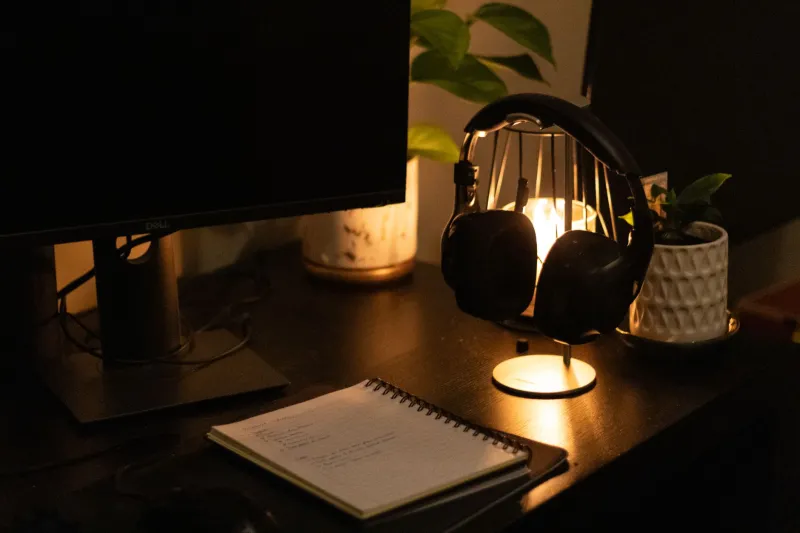
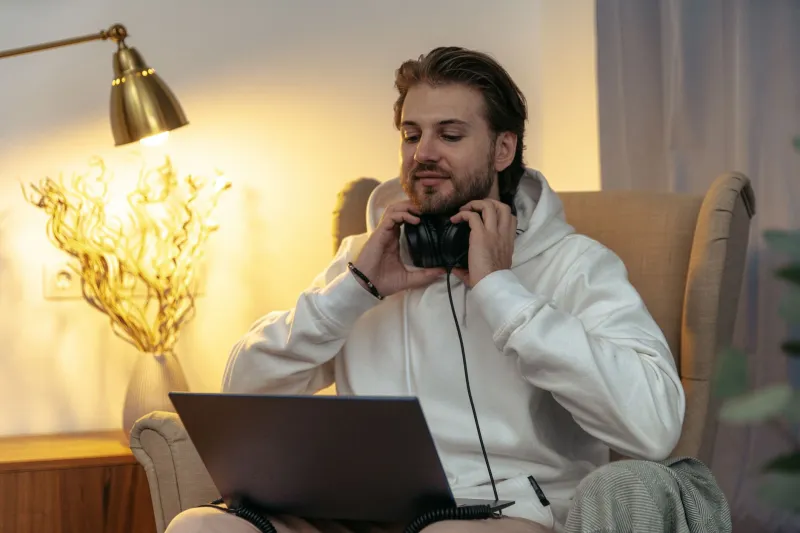
It's 11:47 PM. You've got a half-finished design project open on one screen, a cold cup of coffee on your left, and somewhere in the background, a voice you don't recognize is speaking Javanese between songs. You're not sure what they're saying. And somehow — weirdly, inexplicably — the ideas are flowing.
If you've spent any time listening to Solo Radio during late-night work sessions, you might already know this feeling. That low-grade creative hum that kicks in when the rest of the world goes quiet and something unfamiliar fills the space. It doesn't feel like coincidence. And according to a growing body of research, it probably isn't.
The Quiet Science of Nighttime Creativity
Here's a fun fact your productivity guru probably hasn't mentioned: your prefrontal cortex — the part of your brain responsible for filtering, judging, and second-guessing — gets a little looser at night. Sleep pressure builds up, inhibitions ease, and the mental gatekeeping that blocks wild ideas during your 10 AM standup meeting starts to relax.
This is sometimes called the "incubation effect," and researchers have documented it across creative fields for decades. Painters, writers, coders, musicians — a disproportionate number of them report their best breakthroughs happening in the late evening hours. Not because they're more awake, but because they're less defended.
Now layer in the audio component. A 2012 study published in the Journal of Consumer Research found that moderate ambient sound — roughly 70 decibels — actually enhances abstract thinking compared to silence or loud noise. The sweet spot isn't quiet. It's a gentle wash of sound that keeps your brain just engaged enough to stay out of its own way.
Radio, it turns out, hits that sweet spot almost perfectly.
Why Curated Matters More Than You Think
Not all background audio is created equal. Spotify's algorithmic playlists are designed to keep you engaged — which sounds great until you realize that engagement can mean interruption. Every perfectly predicted song is a small nudge back toward conscious attention. Your brain notices the pattern. It starts anticipating. And anticipation, however mild, is the enemy of the loose, wandering mental state where real creative connections get made.
Human-curated radio works differently. A DJ making live decisions — especially one operating from a cultural context you're not fully fluent in — introduces a quality that algorithms genuinely can't replicate: productive unpredictability.
When Solo Radio's late-night hosts drop a gamelan-influenced indie track between a reggae cut and something that sounds like Central Javanese pop filtered through a lo-fi aesthetic, your brain registers the surprise without being jarred. It's unfamiliar enough to stay curious, cohesive enough to stay calm. That's a neurological tightrope. Human DJs walk it naturally. Algorithms mostly don't.
The Distance Factor Nobody Talks About
There's another layer here that doesn't show up in most creativity research, probably because nobody thought to study it: cultural distance.
Listening to a radio station from Solo, Indonesia, when you're sitting in Chicago or Austin or Portland, creates a specific kind of psychological remove. You're connected — there's a real person on the other end, making real decisions in real time — but you're not immersed in the local context the way you would be listening to your hometown station. You catch fragments. You pick up moods without fully decoding them. You're a participant and an outsider at the same time.
That liminal position, it turns out, is really good for your creative brain.
Research on "psychological distance" — a concept developed by Nira Liberman and Yaacov Trope at NYU — suggests that thinking about things that feel remote (in time, space, or social context) actually expands abstract thinking. When something feels close and immediate, your brain defaults to concrete, practical processing. When it feels distant, you naturally zoom out. You think in bigger patterns. You make connections you'd otherwise miss.
A radio station streaming live from Central Java at midnight, local time? That's about as much psychological distance as you can get without leaving the planet.
What Listeners Are Actually Saying
Ask anyone who's made Solo Radio a regular part of their late-night routine and you'll hear variations on the same theme.
A freelance illustrator in Brooklyn described it as "the audio equivalent of working in a café in a city where you don't speak the language — you're surrounded by life, but none of it is making demands on you."
A grad student in Ann Arbor, deep in thesis season, said she started streaming Solo Radio at around 1 AM because American stations felt "too familiar — every song had a memory attached to it, and I kept getting pulled out of my work." The cultural unfamiliarity of Solo's programming, she said, gave her brain something to rest against without anything to grab onto.
A musician in Nashville — of all places — mentioned that listening to Indonesian radio while writing had started influencing his chord choices in ways he couldn't fully explain. "It's not like I'm copying anything. It's more like my ears got stretched."
None of these people are anomalies. They're describing the same basic phenomenon from different angles: unfamiliar, human-curated audio from a real place creates a creative environment that familiar, algorithm-driven content simply can't replicate.
The Live Presence Effect
There's one more piece worth naming. Solo Radio, like any live radio station, has a DJ who is actually there, making decisions in the moment. That presence — even when you can't understand what they're saying — registers differently than a playlist.
Psychologists sometimes talk about "co-presence," the subtle awareness that another human being is sharing your experience. It's why people work better in libraries than in empty apartments, even when the library is silent. You're not alone. Someone else is awake and attending to something.
At midnight, when the rest of your neighborhood is dark and your phone notifications have finally slowed down, that co-presence from 7,000 miles away is genuinely something. There's a person in Solo who just picked that song. They're awake. They're listening. And so are you.
Tuning Into Something Different
None of this is an argument against your regular playlists or your carefully curated Spotify library. Those tools are great for what they do. But if you've been stuck — creatively, professionally, artistically — and the usual tricks aren't cutting it, it might be worth trying something genuinely different at 11 PM.
Open a browser. Let a human DJ somewhere in Central Java decide what comes next. Let your brain stop anticipating and start wandering.
Some of your best ideas might be waiting right there, just past the point where the familiar runs out.